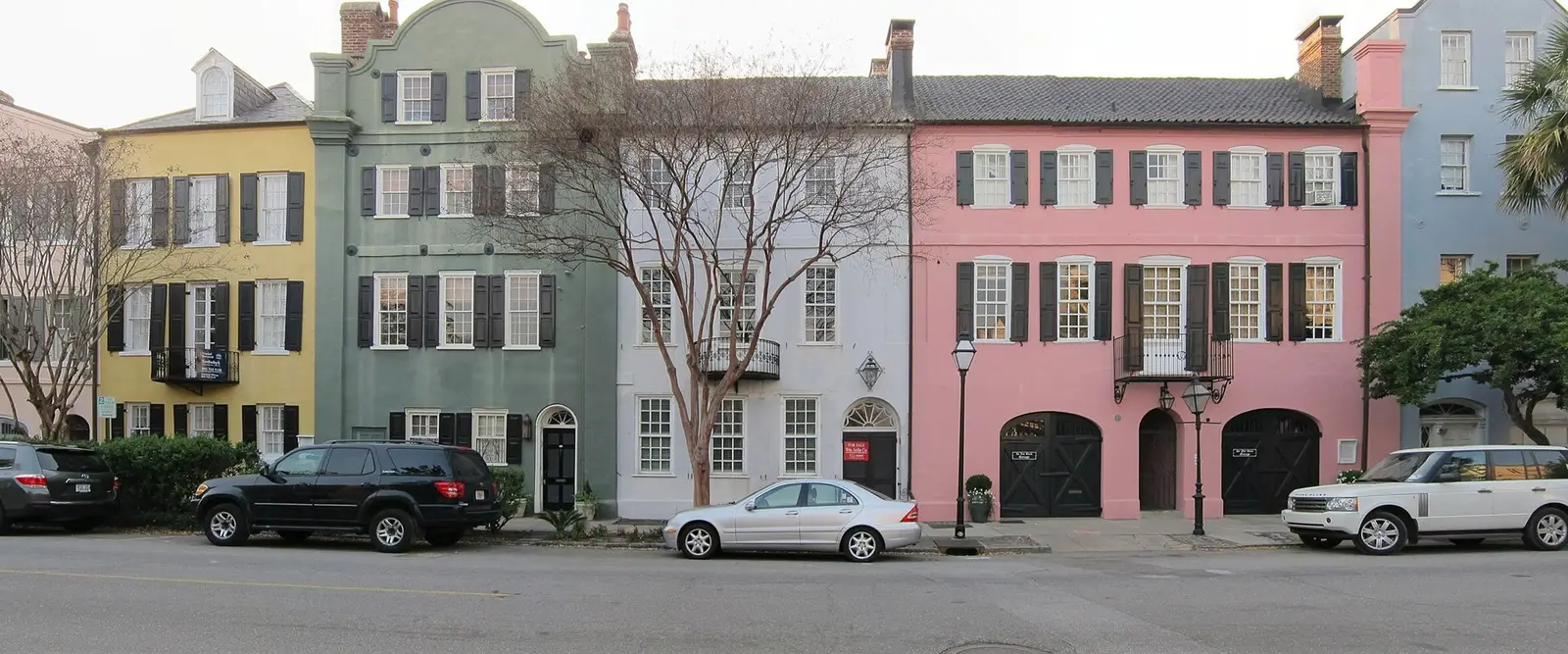
South Carolina still taxes rental income at the state level, and it treats depreciation differently than the federal government does, which makes the planning around a cost segregation study genuinely state-specific here rather than an afterthought. Under H.4216, signed into law in March 2026, South Carolina's top individual income tax rate fell to 5.21 percent on income above $30,000, down from a top rate of roughly 6.2 percent in prior years, with the law also building in further automatic rate cuts over time. More importantly, South Carolina does not conform to federal bonus depreciation, so a study has to be read on two tracks - a large, immediate federal benefit and a smaller, spread-out state benefit. Add in South Carolina's higher property tax assessment ratio on rental property and strong short-term rental demand in Myrtle Beach and the Grand Strand, Charleston, Hilton Head Island, and the Greenville area, and cost segregation becomes a tool worth understanding rather than skipping.
Apex Reserve Group, based in Irvine, California, provides engineering-based cost segregation studies for real estate investors nationwide, including owners of South Carolina rental and short-term rental property. This page is general educational information, not tax or legal advice - confirm how any of it applies to your property and your return with a qualified CPA before you make decisions.
Why Cost Segregation Pays Off in South Carolina
South Carolina is not a no-income-tax state. Under H.4216, signed into law in March 2026, the top individual rate is 5.21 percent on income above $30,000 (1.99 percent below that threshold), down from a top rate of roughly 6.2 percent that applied in prior years, and the statute includes a mechanism for further automatic rate reductions as state revenue grows. Rental profit is taxed at these state rates on top of whatever applies federally, so accelerating deductions still has value even as the rate trends downward.
The more important wrinkle for cost segregation is depreciation itself. South Carolina does not conform to federal bonus depreciation under Internal Revenue Code Section 168(k). An investor who claims 100 percent bonus depreciation on the federal return must add back, on the South Carolina return, the difference between the bonus amount claimed and the depreciation that would have applied without it, in the year the property is placed in service. South Carolina then allows additional depreciation in later years to true up that difference over the asset's remaining life, so nothing is permanently lost at the state level - it is a timing difference, not a bigger lifetime tax bill. Cost segregation still helps the South Carolina return because reclassifying components into 5-, 7-, and 15-year property depreciates them faster under standard schedules than one long 27.5- or 39-year life would, even without a state bonus write-off. The larger, immediate benefit shows up on the federal return, where the full reclassified amount can qualify for 100 percent bonus depreciation in year one.
Property taxes add a second state-specific wrinkle. South Carolina's overall property tax burden is among the lowest of any state, but the state assesses owner-occupied primary residences at 4 percent of fair market value while non-owner-occupied property - including rental homes and short-term rentals - is assessed at 6 percent. That higher assessment ratio raises the carrying cost of an investment property relative to an otherwise identical owner-occupied home, which is one more reason investors look for legitimate ways to offset ownership costs through tax planning.
These dynamics show up most directly in South Carolina's short-term rental hot spots: Myrtle Beach and the Grand Strand, Charleston, Hilton Head Island, and the Greenville area each draw significant visitor volume and rental demand, and properties in all four markets are reasonable candidates for a cost segregation study.
How a Cost Segregation Study Works
A cost segregation study is an engineering-based analysis of a building's construction records, cost detail, and physical components. Instead of depreciating an entire rental property over 27.5 years (residential) or 39 years (commercial) in one straight line, the study identifies specific components - flooring, cabinetry, appliances, specialty electrical and plumbing work, fencing, landscaping, and other land improvements - that the tax code allows to be depreciated over much shorter 5-, 7-, or 15-year periods.
Under current federal law, the One Big Beautiful Bill Act (OBBBA), signed in July 2025, permanently restored 100 percent bonus depreciation for qualified property acquired and placed in service after January 19, 2025. That means the reclassified 5-, 7-, and 15-year components can typically be deducted in full in the first year the property is in service, rather than spread over decades. The building's core structure still depreciates on its standard 27.5- or 39-year schedule; the study's job is to identify what does not have to.
A South Carolina Cost Segregation Example
Say an investor buys a short-term rental near Myrtle Beach for $500,000, with $400,000 of that allocated to the depreciable building (the rest is land, which is never depreciable). Depreciated the standard way over 27.5 years, that building generates roughly $14,500 a year in depreciation deductions.
A cost segregation study might reclassify, for illustration only, around $120,000 of that basis into 5-, 7-, and 15-year property - flooring, appliances, decking, outdoor living features, fencing, and landscaping, for example. On the federal return, current law allows the full $120,000 to be deducted in year one under 100 percent bonus depreciation, instead of roughly $4,400 that would apply to that same amount under standard depreciation in the first year - a meaningful acceleration before even factoring in the investor's tax bracket.
On the South Carolina return, the math looks different because the state does not allow the bonus. The investor would add back the difference between the $120,000 federal bonus deduction and the standard first-year depreciation on that reclassified basis, then recover the remainder through South Carolina's own depreciation schedule over the following years - still faster than the original 27.5-year schedule, just not all at once. The same study produces a large, immediate federal deduction and a smaller, extended state one.
These numbers are hypothetical and for illustration only. Your actual reclassified amount, tax rate, and year-one benefit depend on your specific property, its cost detail, your income, and your filing situation - work through your real numbers with your CPA before deciding.
Already Own Your South Carolina Property? The Look-Back Study
If you already own South Carolina rental property and have been depreciating it the standard way, you do not need to have done a cost segregation study at purchase to benefit now. A look-back study applies the same engineering-based component analysis to a property already in service, and the resulting catch-up depreciation is claimed through IRS Form 3115, a change in accounting method that produces a one-time Section 481(a) adjustment. That adjustment lets your CPA claim some or all of the depreciation you would have taken in prior years as a single deduction in the current tax year, without amending any previously filed returns. The federal-versus-South Carolina distinction described above still applies to a look-back: the federal catch-up can include the 100 percent bonus amount, while the South Carolina portion is recovered through the state's own depreciation schedule rather than as an immediate bonus.
Who Should Consider Cost Segregation in South Carolina
- Short-term rental and Airbnb hosts in Myrtle Beach and the Grand Strand, Charleston, Hilton Head Island, and the Greenville area, where furnished rental property often has a high proportion of shorter-life components such as flooring, furnishings, and outdoor living features.
- Long-term rental owners with single-family homes, duplexes, or small multifamily property anywhere in the state, since the 27.5-year residential schedule applies regardless of tenant type.
- Recent buyers, builders, and renovators, because a cost segregation study delivers the most value in the same year a property is purchased, constructed, or substantially renovated.
- High-income earners weighing the short-term-rental strategy, where an owner who materially participates in a rental with an average guest stay of seven days or less may be able to treat the activity as non-passive, allowing losses - often driven by large first-year depreciation - to offset W-2 or other active income. This depends on meeting IRS material-participation tests and documenting average stay length, and should be structured with your CPA.