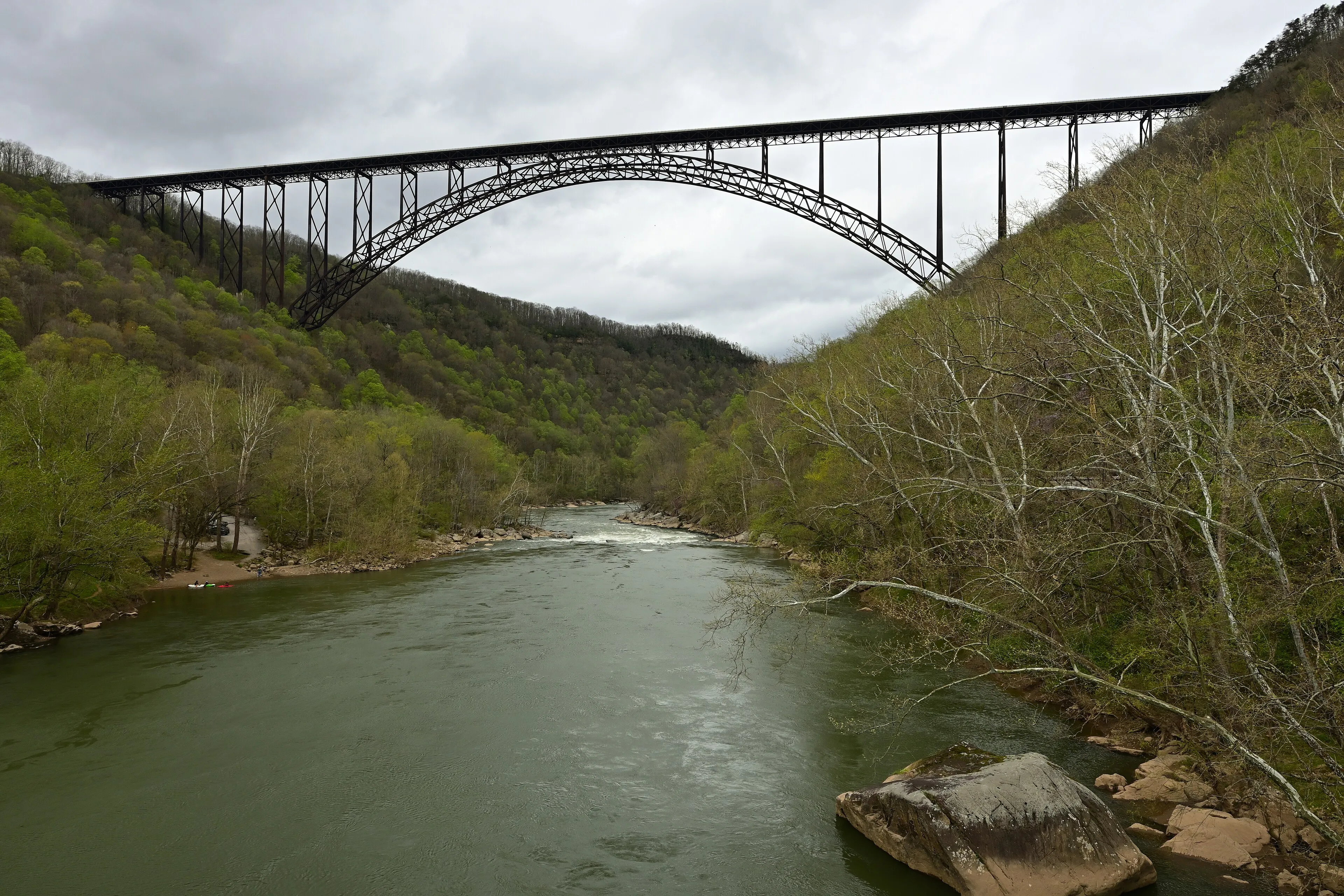
West Virginia is one of the more interesting states in the country for bonus depreciation planning in 2026, not because it automatically conforms to federal law, but because its legislature just voted to catch up to it. West Virginia uses a fixed-date conformity system: the state income tax code is tied to a specific snapshot of the Internal Revenue Code, and lawmakers have to vote every session to move that snapshot forward. In March 2026, they did exactly that, adopting IRC changes made through the end of 2025 - a window that happens to capture the One Big Beautiful Bill Act's restoration of 100% bonus depreciation, though the update reaches different tax years differently, as explained below. For an owner of a rental cabin near the New River Gorge or a long-term duplex in Charleston, that means an engineering-based cost segregation study can, in the right tax year, convert a large share of the building's cost into first-year depreciation deductions against West Virginia taxable income, not just federal.
Apex Reserve Group, based in Irvine, California, prepares engineering-based cost segregation studies for real estate investors nationwide, including short-term rental and long-term rental owners throughout West Virginia. This page is general educational information, not tax or legal advice - work with a qualified CPA or tax attorney familiar with West Virginia's conformity statute before you rely on any depreciation strategy.
Why Cost Segregation Pays Off in West Virginia
West Virginia does not have automatic, rolling conformity to the Internal Revenue Code for its personal income tax. Instead, W. Va. Code §11-21-9 defines federal adjusted gross income by reference to a fixed conformity date that the legislature must update each year. For much of 2025, that date lagged behind the federal changes made by the One Big Beautiful Bill Act (OBBBA), which was signed into law in July 2025 and permanently restored 100% bonus depreciation for qualifying property acquired after January 19, 2025. That lag closed in March 2026, when the legislature passed Senate Bill 400 (personal income tax) alongside Senate Bill 393 (corporate net income tax), moving West Virginia's IRC conformity date to amendments enacted after December 31, 2024 but before January 1, 2026 - a range that squarely includes OBBBA.
The timing matters more than it might appear. SB 400 includes its own effective-date carve-out: for tax years that began before January 1, 2026, the prior conformity date remains fully in effect for that year. In practice, that means the updated conformity date - and West Virginia's resulting alignment with OBBBA's 100% bonus depreciation - governs personal income tax returns for tax years beginning on or after January 1, 2026. An investor filing a 2025 West Virginia return for property placed in service in 2025 is still working under the prior, pre-update conformity snapshot for that return, and should not assume the same bonus depreciation treatment automatically applies to it. A CPA can confirm which conformity date governs a specific tax year, and whether any state-level bonus depreciation modification still applies for that year.
The broader catch is that conformity is not permanent by design in West Virginia - it is reset by statute every legislative session. Investors and their CPAs need to check the current-year conformity date each spring, because a session that fails to update it (or updates it to a date that predates a future federal change) could reintroduce a state-level add-back for bonus depreciation, the way several other states already require. Cost segregation studies remain valuable in that scenario too, since the accelerated deductions still apply for federal purposes regardless of how the state currently treats them.
Property taxes add a second, smaller piece of the picture. Estimates of West Virginia's average effective property tax rate cluster around the mid-0.50% range, and the Tax Foundation's state property tax comparisons consistently place West Virginia among the lowest-taxed states in the country on this measure - complicated somewhat by the state constitution's requirement that assessors value property at 60% of fair market value for ad valorem purposes, which affects how raw assessment figures compare across states. Because property tax bills are already modest, most of the financial case for cost segregation in West Virginia rests on income tax timing rather than reducing an assessed value - which makes the state's bonus-depreciation conformity date, and which tax year it applies to, the dominant factor in the analysis.
How a Cost Segregation Study Works
Under standard IRS depreciation rules, a residential rental building is written off in equal amounts over 27.5 years, and a commercial or mixed-use building over 39 years - regardless of how the property is actually built. A cost segregation study is an engineering-based analysis that breaks a purchase or construction price down into its individual components (flooring, cabinetry, decking, appliances, parking areas, specialty electrical and plumbing, landscaping, and more) and reassigns each one to the shorter depreciation life the tax code actually allows for it, typically 5, 7, or 15 years. Those reclassified components are the ones eligible for bonus depreciation.
Under OBBBA, the restored 100% bonus depreciation rate applies to qualifying property acquired after January 19, 2025 and placed in service - acquisition is generally fixed by the date of a binding written contract, or, for self-constructed property, the date construction begins. That distinction matters: property acquired under a contract signed before January 20, 2025 does not get the 100% rate merely because it happens to be placed in service later - it instead falls under the pre-OBBBA phase-down schedule (40% bonus depreciation for property placed in service in 2025, for example). For components that do clear the post-January-19, 2025 acquisition test, a cost segregation study lets an owner deduct that portion of the cost in year one instead of over decades - federally, and on the West Virginia return as well for tax years to which the state's current conformity date applies.
Short-Term and Long-Term Rental Markets Across West Virginia
West Virginia's rental landscape splits fairly cleanly into a handful of established markets, each with a different mix of property types. The New River Gorge area around Fayetteville and Lansing has grown into one of the state's busiest short-term rental markets on the strength of whitewater rafting, climbing, and the New River Gorge National Park designation, with cabins and A-frames making up much of the inventory. Harpers Ferry and Berkeley Springs, both within a few hours of the Washington, D.C. metro area, draw weekend visitors to historic downtowns and mineral-spring tourism, supporting a steady base of small inns and vacation rentals. Snowshoe Mountain in Pocahontas County anchors the state's ski-season rental market, with condo and townhome inventory that sees heavy seasonal turnover, while Davis and the Canaan Valley area serve a similar four-season outdoor-recreation crowd. On the long-term rental side, Morgantown's university-driven housing demand and Charleston's role as the state capital and largest metro area support more traditional multifamily and single-family rental portfolios. Cost segregation studies apply to any of these property types, whether the underlying asset is a rustic cabin, a resort condo, or a mid-size apartment building, as long as it is used in a trade or business or held for the production of income.
Property Types That Benefit Most
Short-term rental cabins and A-frames near the New River Gorge, Snowshoe, and Canaan Valley tend to have a high proportion of components that qualify for shorter depreciation lives - decking, hot tubs, outdoor lighting, furnishings, and specialty finishes that a general contractor would otherwise lump into the building's 27.5-year basis. Resort condos at Snowshoe often carry significant site-improvement and common-area costs that a study can allocate separately. Historic bed-and-breakfast conversions in towns like Harpers Ferry frequently include renovation work - updated electrical, plumbing, and interior finishes - that a study can reclassify even though the building's core structure remains long-lived. Multifamily and mixed-use buildings in Morgantown and Charleston typically have enough scale (parking areas, landscaping, specialty systems) to make a study worthwhile even without the short-term rental furnishings that boost the percentage for vacation properties. In general, the more a property has been renovated, furnished, or built out with amenities beyond a bare structure, the larger the share of cost a study is likely to reclassify.
Look-Back Studies for Property Already in Service
An investor does not have to order a cost segregation study in the year a property is purchased or built to benefit from one. A look-back study applies the same engineering-based analysis to a property that has already been in service for one or more years, then catches up the missed depreciation in a single filing rather than requiring amended returns for every prior year. The mechanism is IRS Form 3115, Application for Change in Accounting Method, paired with a one-time Section 481(a) adjustment that captures the entire difference between depreciation actually claimed and depreciation that should have been claimed under the corrected component lives, deducted in the current tax year. For a West Virginia owner who bought a rental property in, say, 2022 or 2023 and never had a study performed, a look-back can be a way to recapture a meaningful deduction now, though the state-return benefit still depends on which conformity date applies to the tax year in which the catch-up is claimed.