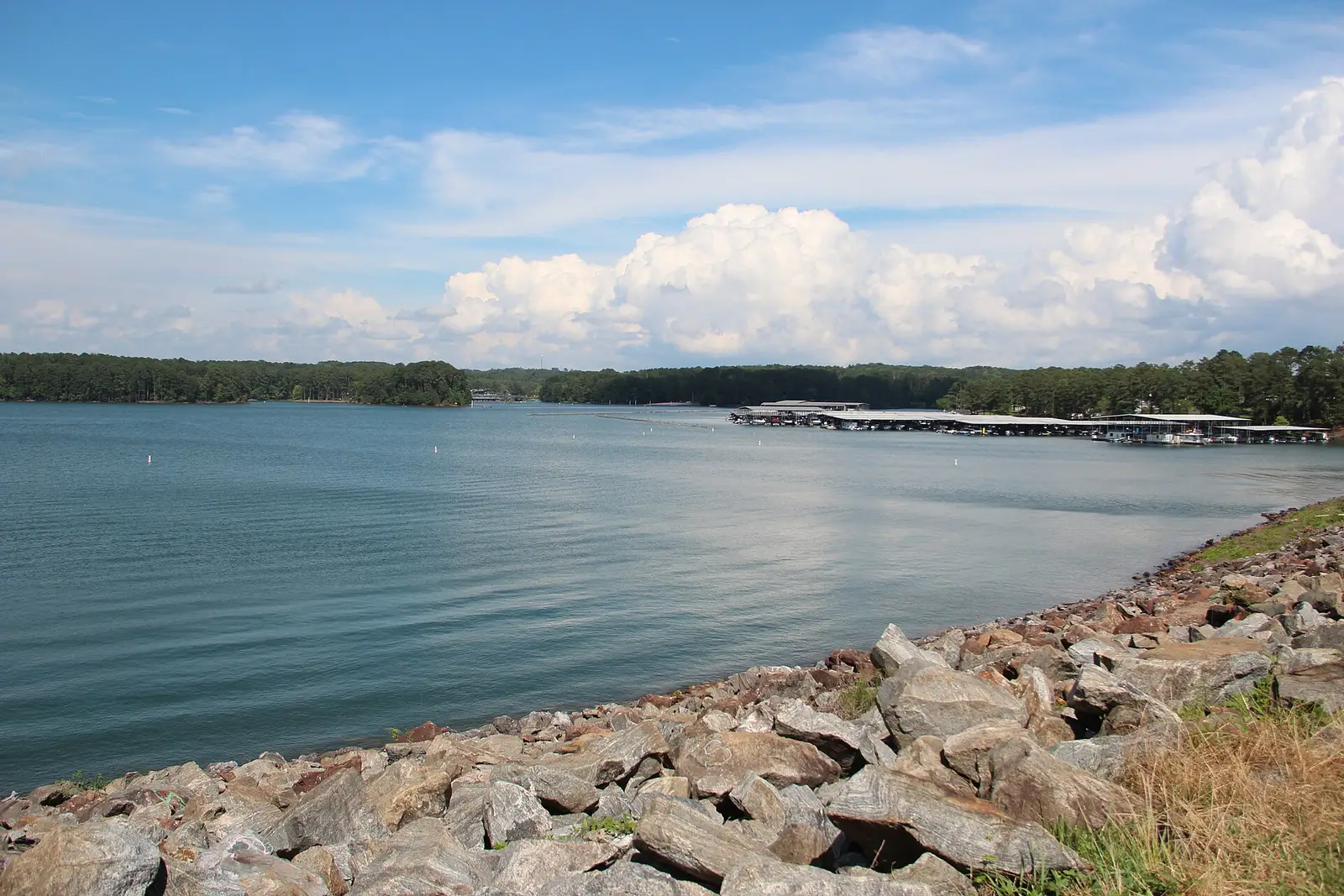
Cherokee County is where metro Atlanta meets the Blue Ridge foothills, and its housing stock tells the story of three decades of northward growth. The county added roughly 78,000 residents between 2010 and 2024, pushing past 290,000, and most of that growth landed in association-governed neighborhoods. Woodstock — incorporated in 1897 and today among Georgia's fastest-growing cities — anchors the south, where the master-planned Towne Lake development has spread more than 5,600 homes across some 3,600 acres since the late 1980s, including the Arnold Palmer golf community of Eagle Watch. Canton, the county seat first incorporated as Etowah in 1833 and renamed a year later, answered in 1999 with BridgeMill: roughly 1,500 acres, more than 2,800 homes, and a championship golf course. Holly Springs and Ball Ground have since caught the same wave, and along the county's southwestern edge, neighborhoods back up to the 270-mile shoreline of Lake Allatoona.
A reserve study written from a template does not fit this county. The line items that matter in a late-1980s Towne Lake swim-tennis neighborhood — second-generation roofs, aging pool shells, clay-heaved sidewalks — are not the ones that matter in a 2018 Holly Springs townhome community or a small association maintaining a detention pond near unincorporated Hickory Flat. Apex Reserve Group is based in Irvine, California, and we build every Cherokee County study around a genuine site inspection performed by our team member based in metro Atlanta, so the funding plan reflects how your components are actually aging in Georgia's heat, humidity, and shifting clay — not how a national average says they should.
Why Cherokee County Associations Need Current Reserve Studies
Cherokee County's association-governed housing is reaching the age where reserve planning stops being theoretical. The Towne Lake neighborhoods west of downtown Woodstock date to the late 1980s and 1990s; many are now working through second roofs, full repaves, and first complete amenity renovations. BridgeMill and the Canton-area subdivisions of the 1999–2006 wave are crossing the 20-to-25-year mark, when original shingle roofs, clubhouse HVAC, pool plaster and equipment, and perimeter fencing all come due at nearly the same time. The humid subtropical climate compresses those schedules further. Long, hot summers age exterior paint and stain faster than national tables assume. Mildew and algae colonize siding and shaded roof planes under the county's heavy tree canopy. Wood decks, pergolas, and playground structures rot from the fastener holes outward. The region's clay soils swell through wet winters and shrink through dry summers, displacing sidewalks, cracking curbs, and loading the retaining walls many associations own without realizing it. Add the occasional hail event or ice storm, and the case for a current, site-inspected reserve study — rather than a stale one, or none — is simply arithmetic.
From Towne Lake to BridgeMill: Cherokee County's Association Landscape
Southern Cherokee County holds the density. Around Woodstock, the roughly 3,600-acre Towne Lake development contains more than 5,600 homes across dozens of neighborhoods, from swim-tennis subdivisions to the golf communities of Eagle Watch — whose Arnold Palmer-designed course opened in 1989 — and Towne Lake Hills. Downtown Woodstock adds a different profile entirely: walkable townhome and condominium stock from the 2000s and 2010s revival, where party walls, shared parking, and streetscape elements dominate the component list. North in Canton, the county seat, BridgeMill spreads more than 2,800 homes across about 1,500 acres around a golf course that opened in late 1998, and its 1999–2006 construction wave is now entering its first major replacement cycle. Holly Springs, incorporated in 1906 and up roughly 76 percent in population between 2010 and 2020, has drawn heavy townhome and single-family subdivision growth. Along the county's southwestern edge, Lake Allatoona — a U.S. Army Corps of Engineers reservoir impounded in 1950 — places some associations near managed shoreline, raising dock, slope, and erosion questions inland boards never face. Farther north the county turns foothill-rural: Ball Ground, incorporated in 1883 and once a marble town, is growing again; Waleska is home to Reinhardt University; and unincorporated crossroads like Hickory Flat keep receiving new subdivisions on former pasture.
What Georgia Law and Your Lenders Expect
Georgia sets no statutory reserve-study requirement for community associations — no state law tells a Cherokee County board when to commission one or how much to save. That does not leave boards without obligations; it relocates them. First, your governing documents control. The declarations, covenants, and bylaws recorded when Towne Lake, BridgeMill, and hundreds of smaller subdivisions were platted frequently call for adequate reserves or periodic capital planning, and a board is bound by what its documents actually say. Second, condominiums here operate under the Georgia Condominium Act (O.C.G.A. Title 44, Chapter 3), and many HOAs have opted into the Georgia Property Owners' Association Act. Neither statute mandates a reserve study, but directors still owe the association duties of care and good faith — and the board that ignores a foreseeable roof, paving, or detention-pond expense is the board most exposed when the special assessment finally arrives. Third, the lending market has become the de facto regulator. FHA, Fannie Mae, and Freddie Mac all examine condominium project finances; conventional guidelines generally look for at least 10 percent of the budget flowing to reserves or a current, compliant reserve study, scrutiny of deferred maintenance has tightened sharply since the Surfside collapse, and the agencies have announced stricter reserve standards taking effect in 2027. For the townhome and condominium stock around downtown Woodstock and Canton, an underfunded reserve line can quietly shrink the pool of buyers able to finance a purchase.
Our Reserve Study Services in Cherokee County
Full Reserve Study — Our baseline engagement: a component-by-component site inspection by our metro Atlanta team member, photo documentation, useful-life estimates calibrated to Georgia's humid climate and clay soils, and a 30-year funding model with multiple scenarios your board can compare. Typical delivery: 3 to 4 weeks.
Reserve Study Update With Site Visit — A refreshed inspection and funding model for associations with an existing study, recommended every 3 to 5 years — sooner if your community has completed major projects or taken storm damage. Typical delivery: 2 to 3 weeks.
Off-Site Annual Update — A desk-based recalibration for the years in between, adjusting for actual expenditures, current reserve balances, and cost inflation so the plan never drifts from reality. Typical delivery: 1 to 2 weeks.
Cherokee County Communities We Serve
We prepare reserve studies for associations throughout Cherokee County, including Woodstock and the Towne Lake, Eagle Watch, and Towne Lake Hills communities; Canton and BridgeMill; Holly Springs; Ball Ground; Waleska; the unincorporated Hickory Flat area; and neighborhoods along the Lake Allatoona shoreline — as well as the smaller subdivisions and townhome communities in every corner of the county between them.