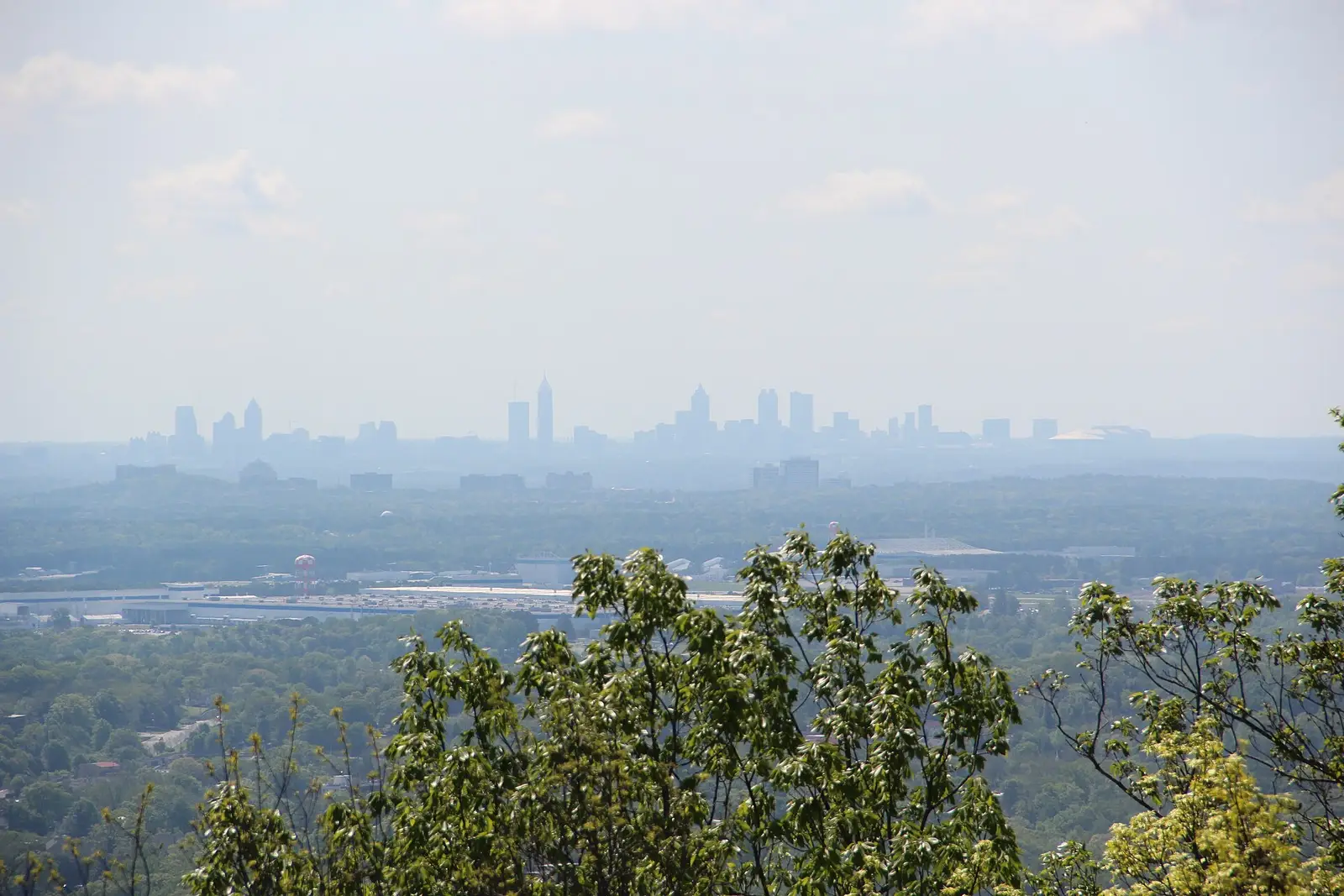
Cobb County is where metro Atlanta's swim/tennis subdivision was perfected. Across unincorporated East Cobb, developments like Indian Hills — opened in 1969 around its country club — set a template that hundreds of neighborhoods followed through the 1980s and 1990s: several hundred homes, a clubhouse, a pool, and banks of tennis courts, all owned and maintained by the association. Chimney Springs alone has more than 700 homes plus a lake, trails, and eight lighted tennis courts, while 1980s neighborhoods such as Sibley Forest and early-1970s communities like Somerset and River Hill carry the same amenity DNA. Around them sits a county of real variety: Marietta, the county seat, mixes historic in-town condos with postwar and newer subdivisions; Smyrna rebuilt its downtown around the Market Village, drawing waves of townhome construction; Vinings, an unincorporated community on the Chattahoochee River, is known for its concentration of condominium and townhome communities; and Mableton, incorporated by referendum in November 2022, is Cobb County's newest city.
A reserve study written from a national template misses what actually drives budgets here — a 45-year-old competition pool and its deck, tennis and pickleball court resurfacing on a fixed rotation, a timber clubhouse under heavy tree canopy, a detention pond the county long ago handed to the association. Apex Reserve Group is based in Irvine, California, and our metro Atlanta team member walks these properties in person, so the component list and useful lives in your study reflect what is on the ground in Cobb County, not an average of everywhere else.
Why Cobb County Associations Need Current Reserve Studies
The math of East Cobb is simple: a subdivision amenity package installed in 1975 or 1985 has now been through multiple replacement cycles, and the next round is bigger than the last. Pool shells and plaster, pump rooms, tennis court surfaces and fencing, clubhouse roofs and HVAC, playgrounds, entry monuments, and private streets all come due on overlapping schedules, and a board working from a decade-old study — or none — usually discovers the overlap only when a special assessment is the last option left. Climate compresses those schedules further. Metro Atlanta's humid subtropical summers push heat and moisture into exterior paint, stained wood siding, decks, and shingle roofs faster than national useful-life tables assume; mildew keeps pressure on coatings; the region's expansive clay soils shift retaining walls, slabs, and pool decks; and the tree canopy that makes these neighborhoods desirable also drops limbs in the county's occasional ice storms and keeps roofs shaded and damp. Hail events add sudden, uneven wear. A current study with a recent site inspection prices that reality into your funding plan before it prices itself in.
From East Cobb's Swim/Tennis Belt to Vinings and Mableton: Cobb's Association Landscape
Unincorporated East Cobb is the county's signature association territory — the swim/tennis belt built from the late 1960s through the 1990s, where communities such as Indian Hills, Chimney Springs, Somerset, River Hill, and Sibley Forest maintain pools, courts, clubhouses, lakes, and common grounds that dominate their reserve components. Marietta, the county seat since Cobb's early days, layers in condominium conversions, townhome infill near the Square, and established single-family HOAs. Smyrna's downtown turnaround, anchored by the Market Village completed in 2002, seeded two decades of townhome and mixed-density construction now reaching its first serious capital cycle. Vinings — still unincorporated after its 2022 cityhood referendum failed — concentrates condominium and townhome associations along the Chattahoochee across from Buckhead, many with parking decks, elevators, and gated infrastructure. The Cumberland area around Truist Park and The Battery Atlanta, opened in 2017, has added newer high-density stock in unincorporated Cobb. To the south, Mableton became Cobb County's newest city with its 2022 cityhood vote and, together with Austell and Powder Springs, holds fast-growing townhome and starter-home HOAs from the 2000s and 2010s. Kennesaw and Acworth round out the north and west with 1990s-and-later planned communities. Each of these belts fails differently, and the component inventory has to be built accordingly.
What Georgia Law and Your Lenders Expect
Start with what Georgia does not do: no statute in the state requires an HOA or condominium association to commission a reserve study, and none sets a minimum reserve balance. What binds a Cobb County board instead comes from three directions. First, your own governing documents. Declarations, covenants, and bylaws frequently direct the board to maintain adequate reserves or to obtain periodic studies, and a board is obligated to follow the documents it operates under. Second, the statutory backdrop. Condominiums are governed by the Georgia Condominium Act (O.C.G.A. Title 44, Chapter 3), and many newer HOAs have opted into the Georgia Property Owners' Association Act; neither act mandates a reserve study, but directors owe the association duties of care and good faith, and a board that can see a 1980s clubhouse roof or a failing retaining wall coming and budgets nothing for it is the board most exposed when the bill arrives. Third, the mortgage market. FHA, Fannie Mae, and Freddie Mac all examine condominium project finances before backing loans; conventional guidelines generally look for at least 10 percent of the annual budget flowing to reserves or, alternatively, a recent compliant reserve study prepared by an independent professional — and since the 2021 Surfside collapse, questionnaires probing deferred maintenance and reserve adequacy have tightened sharply. For Vinings and Cumberland condo buildings, weak reserves can quietly shut buyers out of financing. For an East Cobb swim/tennis HOA, the pressure is less about lenders and more about fiduciary exposure and the resale optics of a five-figure special assessment. A documented study answers both.
Our Reserve Study Services in Cobb County
Full Reserve Study — Our metro Atlanta team member inspects every common component on site — pools, courts, clubhouses, roofs, siding, private streets, detention ponds, retaining walls — and we deliver a 30-year funding plan with percent funded analysis and multiple funding scenarios. Typical delivery: 3 to 4 weeks.
Reserve Study Update With Site Visit — A fresh on-site condition review that revises your existing study's useful lives and costs; recommended every 3 to 5 years, and sooner after major projects or storm damage. Typical delivery: 2 to 3 weeks.
Off-Site Annual Update — A remote refresh in the intervening years that folds completed work, current balances, and inflation into the plan so each budget season starts from live numbers. Typical delivery: 1 to 2 weeks.
Cobb County Communities We Serve
We prepare reserve studies for associations throughout Cobb County, including Marietta, Smyrna, Kennesaw, Acworth, Powder Springs, Austell, and Mableton, along with the county's unincorporated communities — East Cobb and its swim/tennis neighborhoods, Vinings, the Cumberland and Battery area, Fair Oaks, and the Lost Mountain area of West Cobb — and every HOA, townhome, and condominium association in between.