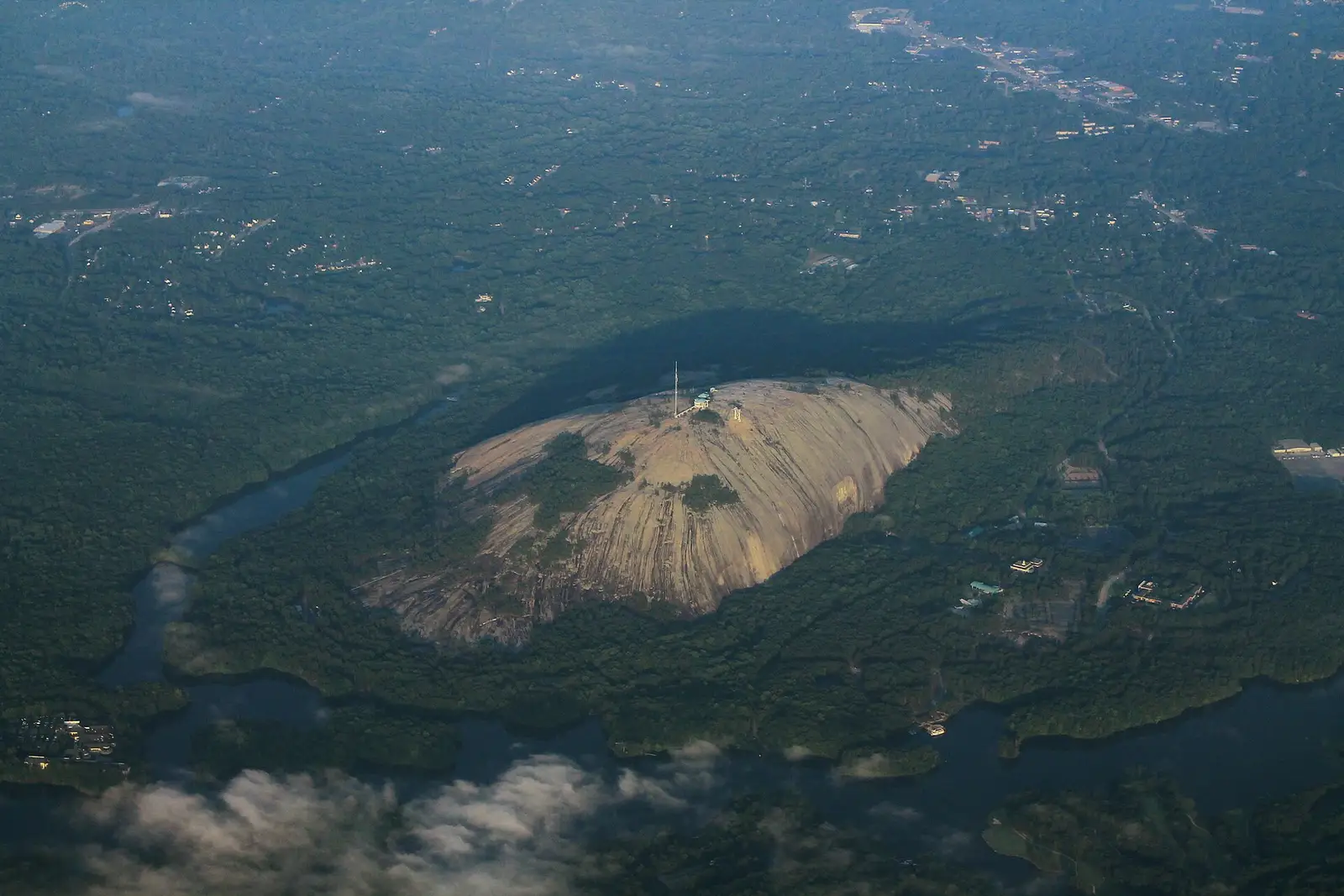
DeKalb County's association landscape stretches from some of metro Atlanta's earliest planned communities to some of its newest cities, often on the same road. Around the courthouse square in Decatur, the county seat, small condominium buildings and townhome infill sit within walking distance of a compact downtown. A few miles west, Druid Hills follows the parkway plan Frederick Law Olmsted drew in 1893, its 1,300-acre historic district running toward the Emory University and CDC campuses on Clifton Road. Avondale Estates, the Tudor-styled planned community founded in 1924, carries a National Register listing of its own. Head north and east and the stock changes character: 1970s brick townhome communities such as Dunwoody Club Townhomes near the Dunwoody Country Club, the 1960s large-lot Smoke Rise neighborhood in Tucker, and Hidden Hills, a community of more than 1,500 homes near Stone Mountain built around a golf course that opened in 1971. Over all of it lies the county's new-city wave — Dunwoody incorporated in 2008, Brookhaven in 2012, Tucker in 2016, Stonecrest in 2017 — which redrew local government lines while broad stretches of DeKalb remain unincorporated.
That range is precisely what a boilerplate reserve study cannot handle. A fifty-year-old townhome association in Dunwoody with original retaining walls, a mid-rise condominium near Perimeter Center, and a small self-managed building off the Decatur square share a county but almost nothing else — except a humid climate that ages wood, coatings, and roofing faster than national tables assume. Apex Reserve Group is headquartered in Irvine, California, and our DeKalb County studies are built on in-person inspections by a team member based in metro Atlanta, so the component list, condition ratings, and funding plan reflect what is actually standing on your property.
Why DeKalb County Associations Need Current Reserve Studies
A large share of DeKalb's condominium and townhome inventory went up between the 1960s and the 1980s, as construction filled in around the newly completed Perimeter highway and Atlanta's growth pushed east. Those communities are now forty to sixty years old — past the first replacement cycle of roofs and repainting and into the more expensive second cycle: underground utilities, clubhouses, pool shells, retaining walls, and private streets. The climate compounds the arithmetic. Humid subtropical summers drive mildew and coating failure on shaded elevations, rot in wood decks, stairs, and siding, and premature aging of asphalt shingles. Georgia's clay soils swell and shrink with moisture, pressing against retaining walls and moving foundations and flatwork. The tree canopy that defines the county keeps roof surfaces damp, loads gutters, and heaves sidewalks, while periodic hail and ice storms layer sudden damage on top of steady wear. Stormwater detention ponds and drainage structures — association-maintained in many DeKalb communities — quietly accumulate six-figure liabilities that never appear in an operating budget. A reserve study based on national useful-life averages misses these local accelerants; a current study anchored in an on-site inspection catches them while the board still has years to fund the answer.
From the Decatur Square to Smoke Rise: DeKalb's Association Landscape
Start in Decatur, where the walkable core supports small and mid-size condominium buildings and townhome infill — associations that are often self-managed, light on amenities, and heavy on building-envelope responsibility. West and north lie Druid Hills and the unincorporated North Druid Hills and Toco Hills areas, where historic single-family blocks mix with condo and townhome communities serving the Emory and CDC workforce along the Clifton corridor. In Dunwoody, the 1970s and 1980s left brick townhome and cluster-home associations — among them Dunwoody Club Townhomes, a four-sided-brick community built in the early 1970s near the country club — alongside single-family swim-and-tennis subdivisions near Dunwoody Village such as Wynterhall and Redfield, while Perimeter Center adds mid- and high-rise condominiums whose budgets turn on elevators, parking decks, and facade work. Brookhaven, a city since 2012, pairs established condominium communities with newer townhome construction along the Peachtree Road spine. Eastward, Tucker — incorporated in 2016 — includes Smoke Rise, a 1960s community of large wooded lots built around a country club. The city of Stone Mountain, a municipality distinct from the adjacent state-owned Stone Mountain Park, anchors an area of 1970s and 1980s subdivisions that includes Hidden Hills and its more than 1,500 homes. Stonecrest, incorporated in 2017 as the county's newest city, and unincorporated communities such as Belvedere Park, Candler-McAfee, Scottdale, Panthersville, and Redan complete a county where the association profile changes every few exits.
What Georgia Law and Your Lenders Expect
Georgia has no statute compelling a homeowners or condominium association to commission a reserve study, and no state-set minimum reserve balance. That absence is where the analysis starts, not where it ends, because three other sources of obligation fill the gap. First, your governing documents: many declarations, covenants, and bylaws recorded in DeKalb County commit the association to maintaining adequate reserves or to periodic reserve analysis, and boards are bound by what their documents say. Second, the statutory backdrop: Georgia condominiums are organized under the Georgia Condominium Act (O.C.G.A. Title 44, Chapter 3), and many HOAs have opted into the Georgia Property Owners' Association Act. Neither act mandates a reserve study — but directors still owe fiduciary duties of care and good faith, and a board that ignores foreseeable capital expenses in a fifty-year-old community will struggle to show it exercised either. Third, the lending market: Fannie Mae, Freddie Mac, and FHA reviewers examine a condominium project's finances and physical condition before backing mortgages there. Conventional guidelines have generally looked for at least 10 percent of budgeted income flowing to reserves — or a compliant reserve study supporting a different figure — and scrutiny of deferred maintenance has tightened sharply since the Surfside collapse, with reserve minimums slated to rise further for projects that lack a current study. For DeKalb's 1960s-to-1980s condo buildings, reserve funding is no longer an internal bookkeeping question; it can determine whether units in the building are financeable at all.
Our Reserve Study Services in DeKalb County
Full Reserve Study — Our complete engagement: a component-by-component site inspection, photo documentation, condition-based useful-life estimates calibrated to Georgia's climate, and a 30-year funding model with percent funded analysis and alternative contribution scenarios. Typical delivery: 3 to 4 weeks.
Reserve Study Update With Site Visit — A refreshed inspection and revised funding plan for associations with an existing study, recommended on a three-to-five-year cycle and whenever major projects have been completed or deferred. Typical delivery: 2 to 3 weeks.
Off-Site Annual Update — A desk revision in the years between inspections that rolls forward your balances, adjusts for actual expenditures and cost inflation, and keeps the study current for lenders. Typical delivery: 1 to 2 weeks.
DeKalb County Communities We Serve
We prepare reserve studies throughout DeKalb County, including Decatur, Dunwoody, Brookhaven, Tucker, Stonecrest, Chamblee, Doraville, Clarkston, Avondale Estates, Lithonia, and the city of Stone Mountain, along with the county's extensive unincorporated communities — among them North Druid Hills, Toco Hills, Scottdale, Belvedere Park, Candler-McAfee, Panthersville, Redan, and Gresham Park — and the DeKalb County portions of the City of Atlanta along the Clifton corridor.