Acworth calls itself the Lake City, but for association boards it is really a city of subdivisions. The old railroad town more than doubled in population during the 1990s — reaching 13,422 residents by 2000 and 22,440 by the 2020 census — and nearly all of that growth arrived as HOA-governed neighborhoods ringing the historic core. Brookstone took shape in the late 1980s around a Larry Nelson co-designed course that opened in 1988 in unincorporated west Cobb; Starr Lake went up between 2001 and 2005 with its pool, lighted tennis courts, and private lake; homebuilding at the 725-acre gated Governors Towne Club began in 2003 around a Curtis Strange course; and Centennial Lakes, begun in 2007 on the Cherokee County side of Acworth's mailing area, mixed townhomes in with its single-family streets. Add Baker Plantation off Baker Road, Lake Acworth Village near the water, more than 2,600 homes at Bentwater across the Paulding line, and the craftsman homes of the Enclave at Historic Acworth a short walk from Main Street, and you have an association landscape spanning four counties and four decades of construction.
A reserve study written from a national template treats all of that as interchangeable suburbia. It is not. A 1980s Brookstone section on its second roof cycle, a master-planned amenity association budgeting for five pools and sixteen tennis courts, and a 30-unit townhome HOA responsible for its own private street and detention pond have almost nothing in common beyond a ZIP code. Apex Reserve Group is headquartered in Irvine, California, and our analysts build every funding model from that base — but the site work in Acworth is done in person by our team member based in metro Atlanta, who walks your property, photographs its components, and sees the same Georgia sun, humidity, and red clay your buildings do.
Why Acworth Associations Need Current Reserve Studies
Acworth's growth curve is now its capital-planning problem. Neighborhoods from the late 1980s and 1990s are 25 to 35 years old: original amenity buildings need HVAC and roof work, tennis courts resurfaced once already need it again, and private streets laid during development are reaching full-depth repair territory. The bigger wave is just behind it — the large cohort of 2000s subdivisions is crossing the 20-year mark all at once, which means first full roof replacements, pool replastering, clubhouse renovations, and repaving landing within a few budget cycles of each other. Georgia's climate compresses those timelines further: months of heat and humidity break down paint and sealants, mildew works on siding and fences, wooden decks and pergolas decay faster than national life tables assume, and an occasional hail or ice event can reshuffle a roofing schedule overnight. Many Acworth communities also own infrastructure homeowners rarely think about — stormwater detention ponds, outfall structures, and retaining walls set in Georgia's erosion-prone red clay — where a deferred repair quietly becomes a six-figure line item. A current study, grounded in an actual site inspection, tells your board what is coming, when, and what monthly contribution keeps a special assessment off the table.
From Main Street to Brookstone: Where Acworth's Associations Are
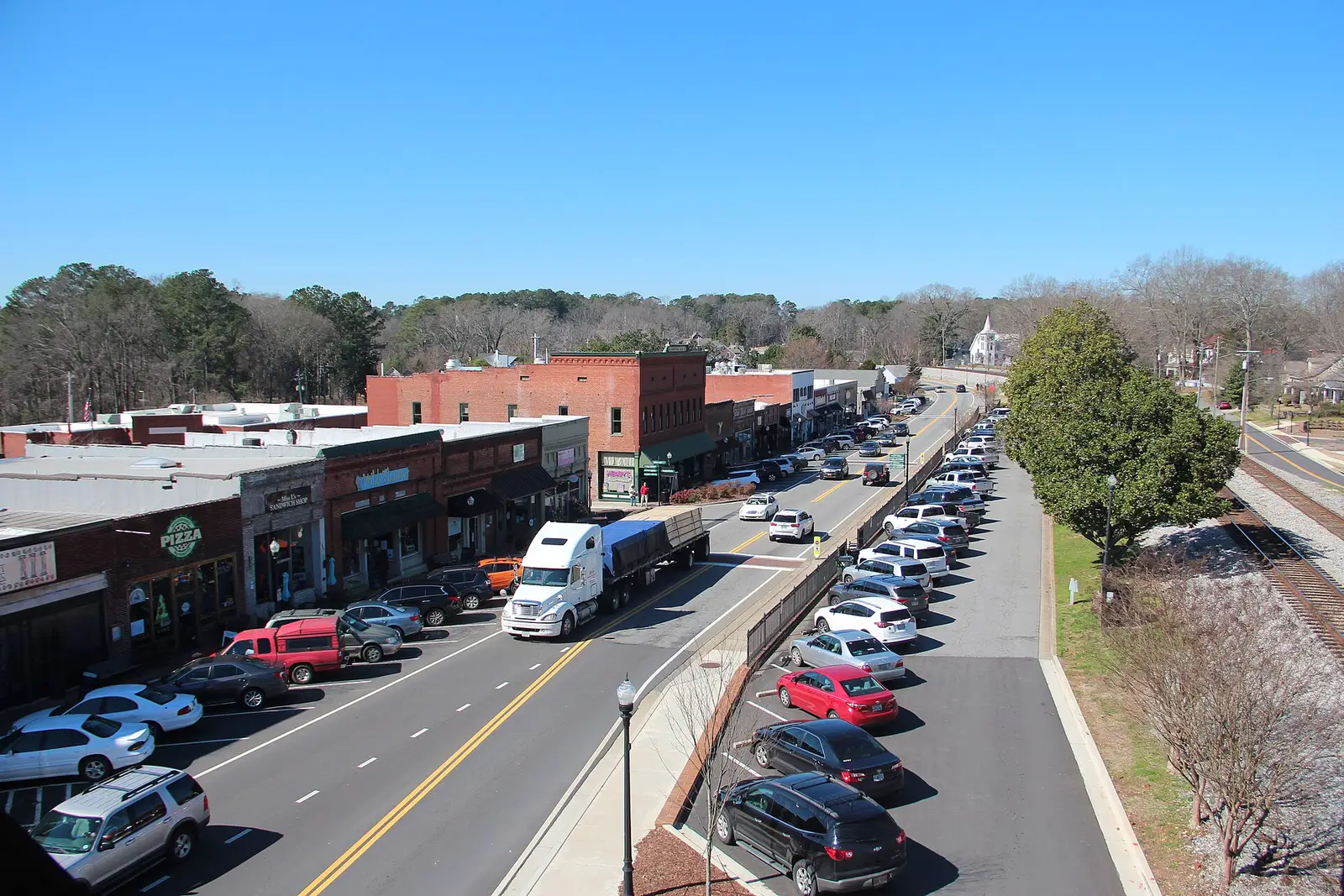
The city's center is the restored downtown along Main Street, where the rail line that gave Acworth its start in the 1840s still runs past the storefronts and the 120-acre Logan Farm Park sits a short walk away; newer HOA neighborhoods such as the Enclave at Historic Acworth — craftsman-style single-family homes on large lots, built in the late 2000s and after — sit within walking distance of both. West of downtown lies Lake Acworth, the 260-acre city lake created by damming Proctor Creek in 1950, with the county-owned Cobblestone Golf Course along its shore, the 1953 beach pavilion at Cauble Park, and neighborhoods such as Lake Acworth Village nearby. South and west, unincorporated west Cobb holds the golf-course communities: Brookstone's three original sections plus The Farm at Brookstone, and the gated Governors Towne Club, whose 725 acres reach toward the Paulding line. The Baker Road corridor on the city's east side carries 1990s and 2000s swim-tennis subdivisions such as Baker Plantation, while on the west side, off County Line Road near the Paulding line, Starr Lake pairs its pool and lighted tennis courts with a private fishing lake. And because Acworth mailing addresses extend well past the city limits, our service area here takes in Bentwater in northeast Paulding County — more than 2,600 homes, five pools, sixteen tennis courts, and a golf course of its own — and Centennial Lakes in southwest Cherokee County, where townhome sections share a clubhouse, a Junior Olympic pool, and a fishing lake with the single-family streets. Each of those settings produces a different component list, and the study has to start from yours.
What Georgia Law and Your Lenders Expect
Start with the document that actually governs you: your declaration and bylaws. Georgia has no statute ordering community associations to commission reserve studies, so whatever your covenants say about reserve funding and capital planning is the closest thing to a mandate most Acworth boards will meet. The two state frameworks that do apply — the Georgia Condominium Act (O.C.G.A. Title 44, Chapter 3) and the opt-in Georgia Property Owners' Association Act, which a community elects in its recorded declaration — deal with formation, assessments, and disclosure rather than reserve adequacy, and neither compels a study. What Georgia law does impose is a fiduciary standard: directors owe the association ordinary care, and a board that can see a roof cycle approaching across an entire 1990s subdivision yet budgets nothing for it is assembling its own liability exposure. The sharper pressure today comes from the mortgage market. FHA, Fannie Mae, and Freddie Mac condo project reviews have long looked for either roughly ten percent of the annual budget flowing to reserves or a professional reserve study that supports the association's funding level — and that bar is rising: Fannie Mae's Lender Letter LL-2026-03 raises the minimum reserve contribution to fifteen percent of budgeted assessment income for loan applications dated on or after January 4, 2027, and tightens what a reserve study must demonstrate before it can substitute for the percentage test. Since the Surfside collapse the agencies have also pressed much harder on deferred maintenance and unfunded repairs. For attached-housing stock carrying an Acworth address — the townhome sections at Centennial Lakes among them — that scrutiny lands directly on whether the next buyer's financing closes.
Our Reserve Study Services in Acworth
Full Reserve Study — Our Atlanta-area team member performs a component-by-component field inspection with photo documentation, and we deliver a 30-year expenditure schedule with funding scenarios your board can weigh side by side; the right starting point for a community with no usable prior study. Typical delivery: 3 to 4 weeks.
Reserve Study Update With Site Visit — We return to the property, re-inspect components, record completed projects and new wear, and rebuild the funding schedule to match observed conditions — the periodic refresh most boards put on a multi-year rotation. Typical delivery: 2 to 3 weeks.
Off-Site Annual Update — In non-inspection years we true up the numbers — reserve balances, interest, inflation, revised project costs — so the plan your board budgets from never drifts far from reality. Typical delivery: 1 to 2 weeks.
Acworth Communities We Serve
Our service area covers associations throughout Acworth and its surrounding ZIP codes, including the historic downtown and Main Street district, neighborhoods around Lake Acworth and Cauble Park, the Baker Road corridor, and communities such as Brookstone, The Farm at Brookstone, Governors Towne Club, Starr Lake, Baker Plantation, Lake Acworth Village, and the Enclave at Historic Acworth. Because Acworth addresses reach into neighboring counties, our coverage also extends to Bentwater in Paulding County, Centennial Lakes in Cherokee County, and Acworth-addressed communities in southeast Bartow County, along with nearby Kennesaw and the rest of unincorporated west Cobb.