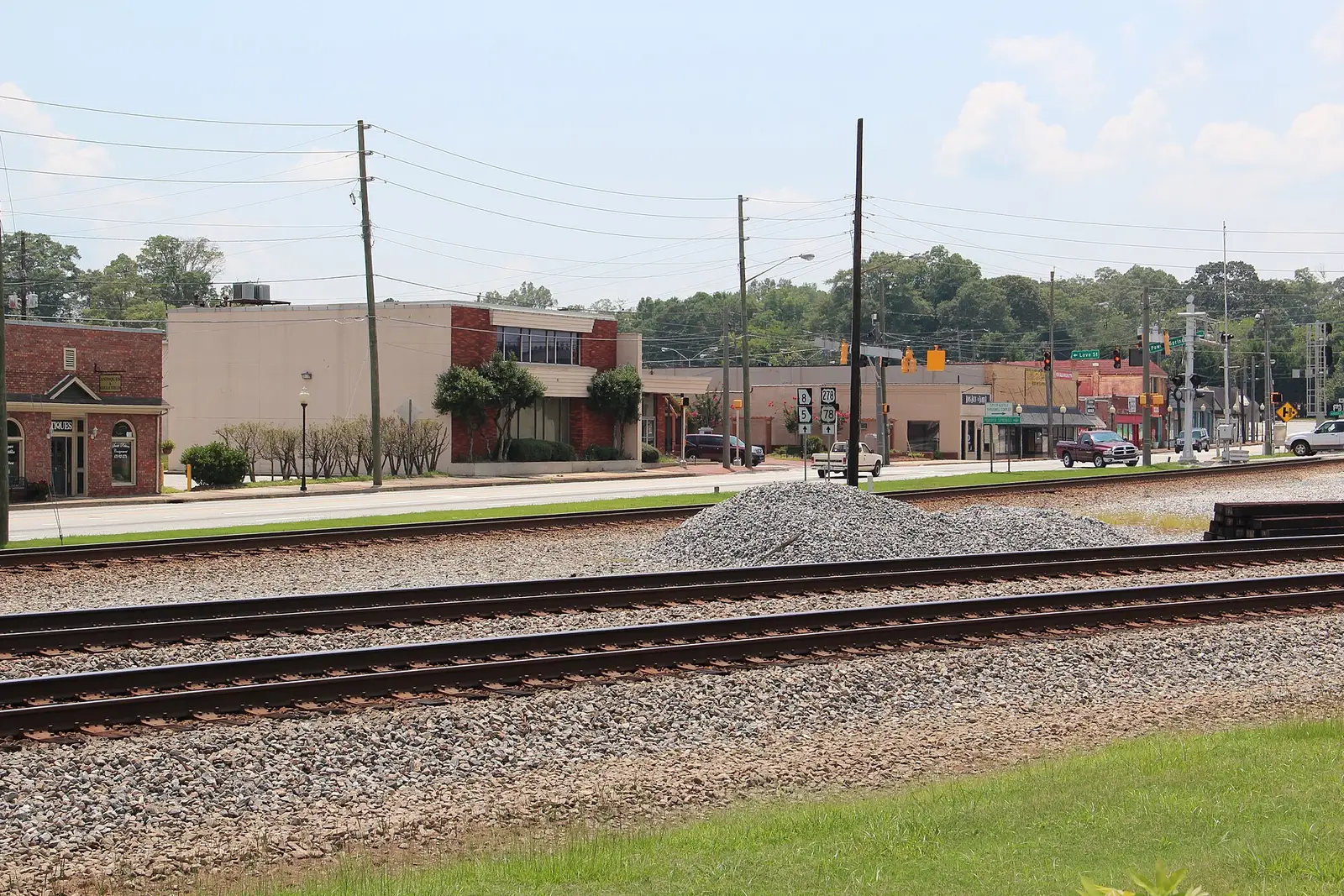
Austell is one of Cobb County's smallest cities — 7,713 residents at the 2020 census — incorporated in 1885 where the Georgia Pacific and the East Tennessee, Virginia and Georgia railroads met, and named in honor of Alfred Austell, the Atlanta banker recognized for establishing railway networks across the South. The housing reflects that long history: modest single-family streets around the old rail-junction core, 1990s subdivisions such as Sweetwater Plantation (built 1995 to 1997), and then a distinctly modern layer of attached housing. Gated Kings Lake Townhomes built out between 2007 and 2021, Park Center Pointe opened sales on its 51 townhomes in 2023, and Sanders Park is adding 61 single-family homes and 107 townhomes along Maxham Road — which means much of Austell's association-governed housing is attached product that is just now aging into its first serious capital cycle.
That profile defeats a generic reserve study. National useful-life tables do not know that Georgia humidity mildews siding on a schedule, that Piedmont clay works on private pavement, or that an Austell detention pond earned its place in the component inventory the hard way in September 2009. Apex Reserve Group is based in Irvine, California, and pairs that analytical practice with a team member based in the Atlanta area who performs the on-site inspections — so an Austell study is scoped, walked, and priced around the community that actually exists rather than a template of one.
Why Austell Associations Need Current Reserve Studies
Most of Austell's association-governed housing went up in two bursts, and both are now on the clock. The townhome communities of the 2007-to-2021 wave are reaching the age where original shingles, exterior paint, fencing, and private pavement stop being the builder's problem and become the HOA's largest budget lines — frequently all inside the same five-year window. The 1990s subdivisions have already replaced their first round of pool equipment and entrance features and are pricing the second round at costs the original budgets never imagined.
Layered over both is water. In September 2009, Sweetwater Creek near Austell crested at a record 30.8 feet — more than six feet above the estimated 500-year flood stage — and homes in the Sweetwater Plantation subdivision were left underwater. Any association that owns a detention pond, outfall structure, culvert, or drainage easement should carry it in the reserve inventory with an inspection-based condition rating and useful life, because private stormwater facilities are the association's to maintain and a failed pond is among the costliest surprises a small community can absorb.
A current study, refreshed on a three-to-five-year cadence with a site visit, is how a board keeps these converging obligations from arriving all at once as a special assessment.
From the Threadmill to Maxham Road: Austell's Association Landscape
The oldest part of town — the small grid at the rail junction, anchored by the historic Broad Street storefronts of the settlement first known as Cincinnati Junction — is largely single-family housing with no association at all. The HOA map follows the newer corridors instead. Along Maxham Road, Sanders Park is under construction with a lawn-maintenance HOA covering 61 houses and 107 townhomes. Gated Kings Lake Townhomes (2007 to 2021) and Park Center Pointe (sales opened 2023) represent the fee-simple attached communities that now dominate new construction, joined by townhome infill such as Magnolia Square and Medlock Park. Between those eras sit the 1990s-vintage subdivisions — Sweetwater Plantation, Sweetwater Valley, Camerons Crossing — several of them close enough to Sweetwater Creek to remember 2009 vividly.
Geography here comes with an asterisk: a large share of Austell-addressed property lies outside the city line in unincorporated Cobb County. Six Flags Over Georgia is the famous example — the park opened in 1967 with an Austell mailing address, yet it sits beyond the city limits in what is now the newly incorporated city of Mableton — and the National Register mill village at unincorporated Clarkdale, toward Powder Springs, is another; there, on Austell Powder Springs Road, the city has operated the former Coats & Clark spinning mill as the Threadmill Complex since purchasing it in July 2001. Our service area treats city and unincorporated Austell addresses identically. What matters for a reserve study is not the jurisdiction but the component list: townhome associations here typically carry roofs, exterior surfaces, and private streets for every building, while single-family HOAs may maintain only an entrance, a pool, and a pond. Those are different studies, and we build each around what your association actually owns.
What Georgia Law and Your Lenders Expect
Start with what Georgia does not require: no state statute obligates any association to obtain a reserve study. The Georgia Condominium Act (O.C.G.A. Title 44, Chapter 3) sets the framework for creating and administering condominiums, and the Georgia Property Owners' Association Act binds only the HOAs that have opted into it through their recorded declarations — and neither act orders a study or sets a funding floor.
Three pressures fill that vacuum. Your governing documents come first: many declarations and bylaws in the Austell area call for reserve funding or periodic capital planning, and a board that skips obligations written into its own documents has manufactured its own liability. Fiduciary duty comes second: Georgia directors owe the association ordinary care and good faith, and a board that watches shingles curl and pavement crack while budgeting nothing for either risks crossing into the gross negligence or bad faith that reserve planning exists to prevent. Lenders come third and bite hardest: Fannie Mae, Freddie Mac, and FHA project review generally wants to see roughly 10 percent of the budget flowing to reserves — or a current reserve study that supports the funding plan — and since the Surfside collapse in 2021 the agencies have grown markedly stricter about deferred maintenance, special assessments, and inspection findings, with standards still tightening. Condominium-form communities feel those rules at every financed sale; even fee-simple townhome HOAs now routinely field lender questionnaires probing reserves and maintenance backlogs. In a town where a growing share of the association housing is attached product built since 2007 and bought overwhelmingly with mortgages, reserve adequacy is not an abstraction — it is whether the next buyer's loan closes.
Our Reserve Study Services in Austell
Full Reserve Study — A ground-up engagement for communities without a current baseline: our Atlanta-area team member walks every common component — roofing, siding and trim, private pavement, pools, fencing, retaining walls, detention facilities — and we deliver a 30-year funding model with percent funded analysis and useful lives adjusted for Georgia heat, humidity, and clay soils. Typical delivery: 3 to 4 weeks.
Reserve Study Update With Site Visit — A re-inspection on the three-to-five-year cadence most Austell boards should keep, reconciling projected component lives against what the climate and completed projects have actually done to the property. Typical delivery: 2 to 3 weeks.
Off-Site Annual Update — A remote refresh for the years between site visits that rolls the plan forward for inflation, interest, completed work, and reserve balance changes so the next budget rests on current numbers. Typical delivery: 1 to 2 weeks.
Austell Communities We Serve
Our service area covers HOA and condominium associations throughout Austell and the Austell-addressed neighborhoods of unincorporated Cobb County, including Sweetwater Plantation, Sweetwater Valley, Kings Lake Townhomes, Park Center Pointe, Sanders Park, Camerons Crossing, Creekside Overlook, Madison Point, Madison Ridge, Magnolia Square, Medlock Park, The Park at Silver Creek, Anderson Ridge, Hillcrest Chase, and Wesley Station, along with communities toward Clarkdale, Powder Springs, Mableton, and Lithia Springs.