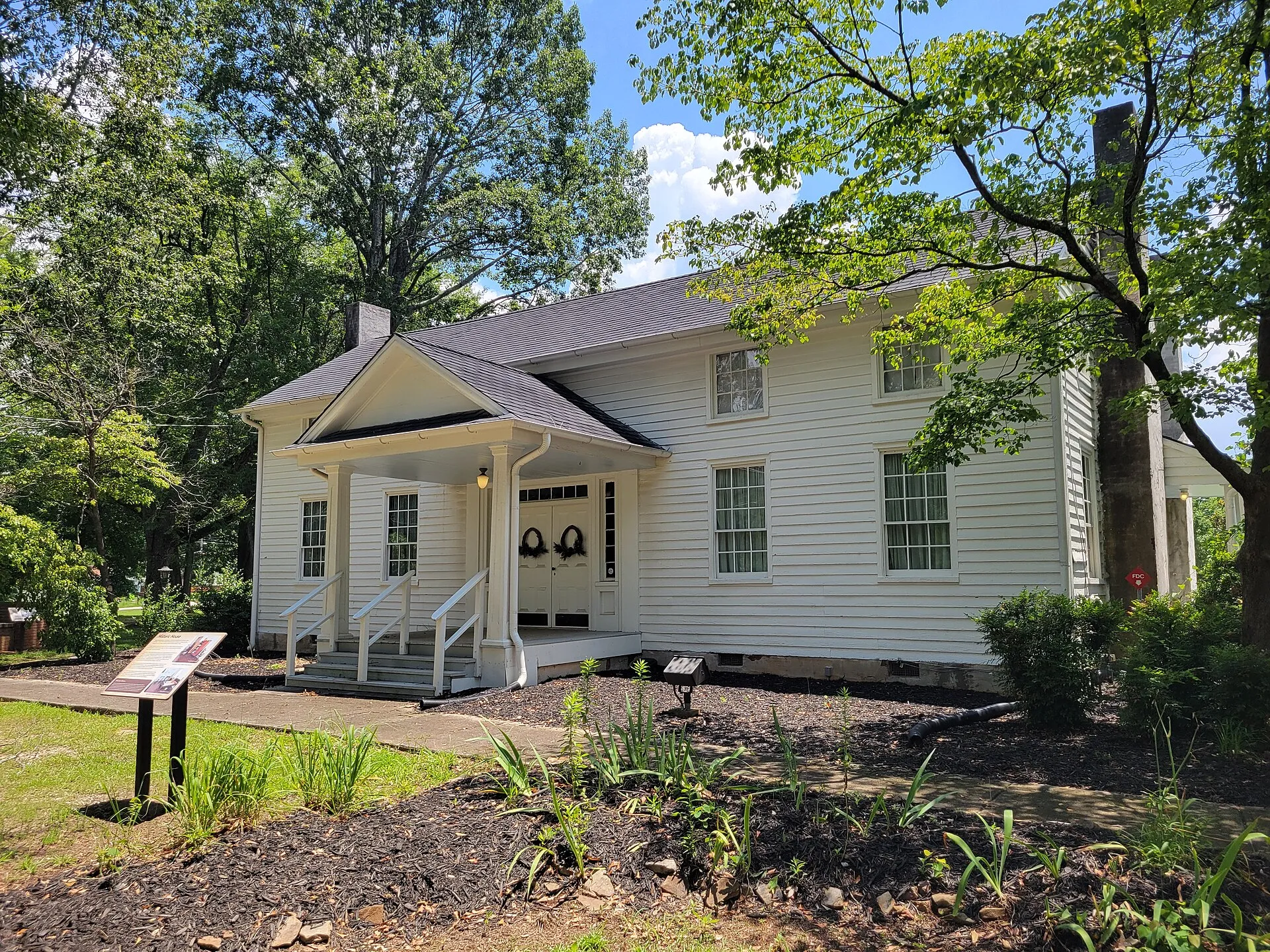
Mableton has been a city only since 2023, but its associations are much older than its charter. Voters approved incorporation by referendum in November 2022, the first mayor and council were seated the following year, and roughly 78,000 residents — enough to make Mableton Cobb County's largest city by population, and Georgia's newest at the time — found themselves inside municipal limits drawn around decades of unincorporated-era subdivision growth. That inheritance defines the association landscape: gated John Wieland communities from the 2000s building years, including Providence near Queen Mill Road and Legacy at the River Line off Veterans Memorial Highway; the Mableton-addressed sections of Vinings Estates, whose Ridge and Cove townhome neighborhoods date to 2001–2005; a deep bench of established subdivisions such as Heritage Lakes, Ashton Park, and Collins Lake; and late-2010s Meritage townhome communities like Concord Trace and Concord Trails. A 2018 community directory counted 59 self- or professionally managed subdivisions here.
A generic reserve study flattens all of that. National useful-life tables don't know that Georgia's heat, humidity, and clay soils punish shingles, siding, wood decks, and asphalt on an accelerated schedule; that the mature tree canopy — one of Mableton's genuine amenities — fills gutters, heaves flatwork, and drops limbs in summer storms; or that HOA-owned detention ponds silt in quietly until the invoice is anything but quiet. Apex Reserve Group is headquartered in Irvine, California, with a team member based in metro Atlanta who performs Mableton site inspections in person — so the component lives in your study reflect what south Cobb conditions actually do to roofs, coatings, and pavement, not what a national table assumes.
Why Mableton Associations Need Current Reserve Studies
Mableton has already lived the underfunding story once. Its first city charter, granted in 1912, was dissolved in 1916 after a flood left the young town facing repairs it could not pay for on its own. A century later the risk has simply moved from public ledgers to private ones — because most of the city's association-governed housing went up while this was still unincorporated Cobb County, and the busiest construction stretch, roughly the late 1990s through the late 2000s, means a large share of these communities are now entering their first full replacement cycle. Original shingle roofs, private streets, pool plaster and pump equipment, clubhouse HVAC, wooden fencing, and retaining walls tend to come due within a few years of one another, and a board still running on the developer's opening budget assumptions will meet that cluster of expenses unprepared. The climate compresses the timeline further: heat and humidity age coatings, siding, and decking faster than national averages allow, while moisture-driven movement in the region's red clay soils keeps asphalt and hardscape shifting. And there is no longer any reason to wait for boundary questions to settle — the Georgia Supreme Court unanimously upheld the city's incorporation in January 2025, and legislative attempts to carve neighborhoods out of Mableton did not become law. The map your association sits on today is the one to plan around, and a current study built on a recent site inspection turns the coming decade from guesswork into a funding schedule your members can see in advance.
Vinings Estates, the River Line, and Everything Between: Mableton's Association Geography
The city's northern reaches, where Mableton meets Smyrna, hold its densest concentration of amenity-rich communities. Vinings Estates — a John Wieland development whose three pools and eight tennis courts serve sections on both sides of the city line — includes Mableton-addressed townhome neighborhoods such as The Ridge (2001–2003) and The Cove (2004–2005), and the surrounding hills carry a whole family of Vinings-named associations: Vinings Brooke, Vinings Cove, Vinings Place, Vinings Springs, and Retreat at Old Vinings Lake among them. To the east, the Nickajack Creek corridor that Mableton shares with Smyrna anchors the River Line Historic Area — where several subdivisions preserve Civil War fortifications within their common ground, and where Heritage Park's boardwalk trail passes the ruins of the 1847 Concord Woolen Mill on its way to the Silver Comet Trail. Communities along Oakdale and Buckner Roads belong to this pocket — Oakdale Bluffs, Regency at Oakdale Ridge, Registry Oaks, and Brookmere among them — as does nearby Legacy at the River Line, a gated Wieland community entered off Veterans Memorial Highway, built out between roughly 2006 and 2018 with two pools and three lighted tennis courts. Near Veterans Memorial Highway and Queen Mill Road sits Providence, a gated Wieland community from the early 2000s that mixes townhomes and single-family homes around a clubhouse, pool, and lighted tennis. Along Floyd Road — past the Mable House grounds and their 2,500-capacity amphitheatre — older subdivisions from the unincorporated years share the corridor with newer construction, including the Meritage-built townhome communities Concord Trace and Concord Trails, which joined the inventory around 2017. Each pocket carries a different component load, and the study has to be built from your inventory, not a template.
What Georgia Law and Your Lenders Expect
No Georgia statute obligates an association to commission a reserve study — that is the honest starting point, and it is where a Mableton board's real obligations begin rather than end. The Georgia Condominium Act (O.C.G.A. Title 44, Chapter 3) supplies the legal framework for the city's condominium communities, and the Property Owners' Association Act offers an opt-in framework for HOAs that have elected into it; neither statute dictates a reserve amount or requires a study. What both leave fully intact is the board's fiduciary duty. Directors must act with ordinary care and in good faith, and a board that can see a roof, a private street, or a detention pond approaching the end of its service life — yet budgets nothing toward it — is exposed when the special assessment finally lands. Your own declaration and bylaws may go further; many governing documents from Mableton's 2000s-era developments speak to reserve funding directly, and they bind the board even where state law is silent. The sharpest pressure, though, comes from lenders. Since the Surfside collapse, FHA, Fannie Mae, and Freddie Mac project reviews have pressed condominium associations hard on deferred maintenance and reserve adequacy, generally looking for around ten percent of the budget flowing to reserves or a compliant reserve study supporting a different figure. For any Mableton community organized as a condominium, that review follows every buyer's loan application — and a current study is often the difference between an approvable project and a flagged one.
Our Reserve Study Services in Mableton
Full Reserve Study — Our Atlanta-area team member walks every common element in person and photographs its condition, and we build the results into a thirty-year capital projection with funding scenarios the board can vote on. Typical delivery: 3 to 4 weeks.
Reserve Study Update With Site Visit — A re-inspection and refreshed funding model for associations with an existing study, recommended on a three-to-five-year cycle or after major projects close out. Typical delivery: 2 to 3 weeks.
Off-Site Annual Update — A remote recalibration in the intervening years, folding completed work, current reserve balances, and cost inflation back into the plan. Typical delivery: 1 to 2 weeks.
Mableton Communities We Cover
Our service area takes in associations throughout the city and the surrounding 30126 area, among them communities such as Providence, Legacy at the River Line, The Ridge at Vinings Estates, The Cove at Vinings Estates, Vinings Brooke, Vinings Cove, Vinings Place, Vinings Plantation, Vinings Springs, Vinings Vintage, Retreat at Old Vinings Lake, Riverview at Vinings, Oakdale Bluffs, Regency at Oakdale Ridge, Regency at Riverline Crossing, Registry Oaks, Brookmere, Ashton Park, Heritage Lakes, Collins Lake, Cobblestone Creek, Coopers Glen, Glenleigh, Huntcrest, Kingsbridge, Madison Green, Meadows at Queen Mill, Stoneybrook, Walden Crossing, Concord Trace, and Concord Trails. Because several communities straddle the Mableton–Smyrna line, our service area covers both sides of it — the boundary matters to the tax bill, not to the roof.