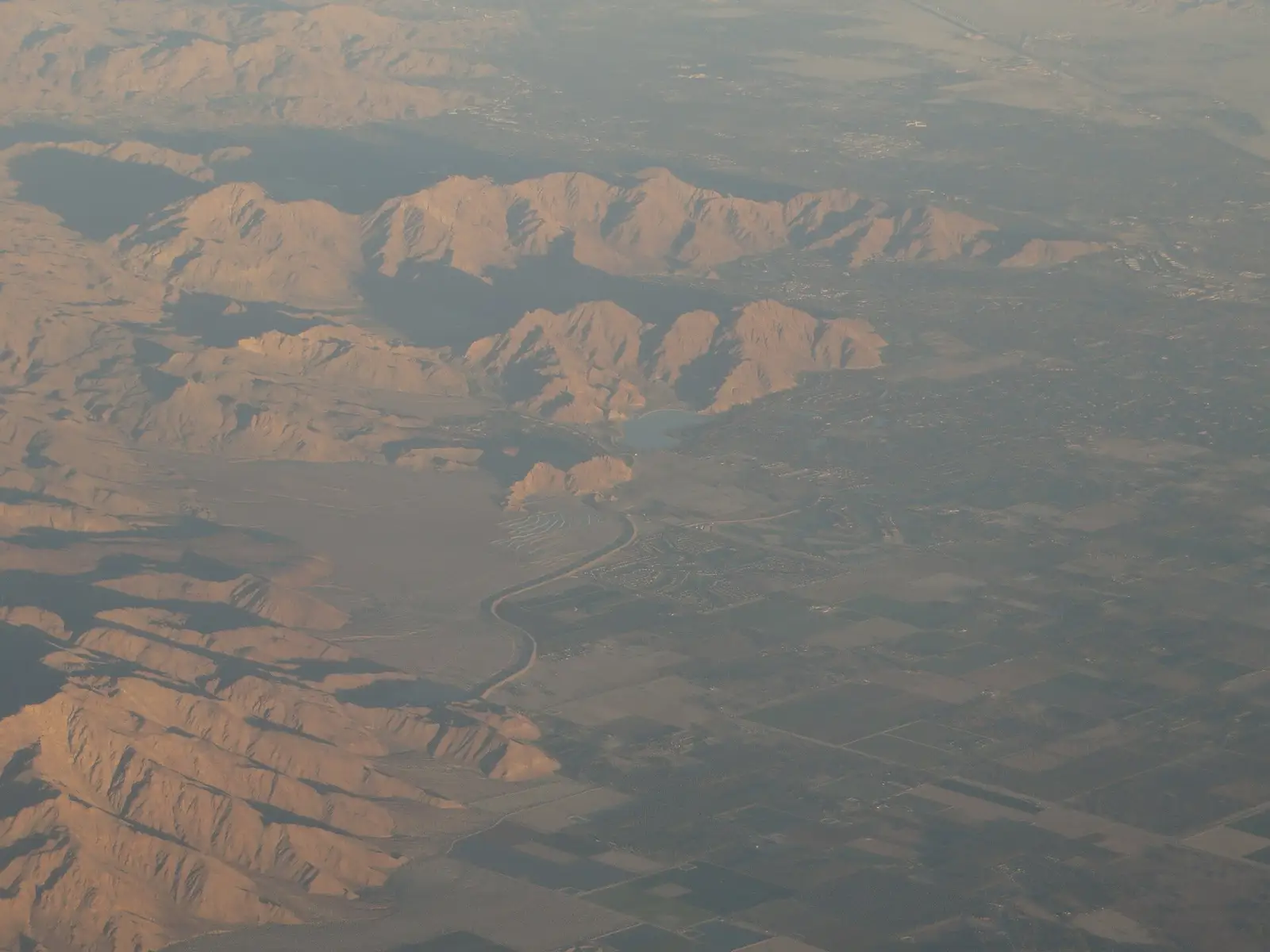
La Quinta calls itself the Gem of the Desert, and its association landscape tracks a short, intense development arc. The city incorporated in 1982, taking its name from the La Quinta Resort that opened in 1926, and within a few years PGA West was rising south of Avenue 52 — the Pete Dye Stadium Course opened in 1986, and the first condominiums and homes followed in the mid-to-late 1980s inside a series of gated enclaves. Along the resort corridor, Santa Rosa Cove added gated condominiums in the 1980s beside the historic hotel grounds, and nearby Duna La Quinta, on Avenue 50, began its guard-gated mix of condominiums and homes in the mid-1980s. The 1990s brought Rancho La Quinta Country Club, built out to roughly 960 homes by 2000, and The Citrus Club, developed within former citrus groves; the 2000s added Trilogy at La Quinta, a 55-plus community built by Shea Homes between about 2002 and 2011 at the foot of the Santa Rosa Mountains, along with luxury clubs such as The Hideaway, The Madison Club, and Andalusia Country Club.
A reserve study built on mild-climate assumptions misreads nearly every one of those communities. Average July highs here run around 106 to 107 degrees, sun exposure is relentless, and the Santa Rosa Mountains shed flash runoff toward the valley floor through engineered channels — so roofs, coatings, asphalt, pool systems, and drainage components age on a desert schedule, not a coastal one. Add the seasonal rhythm of a resort city, where a large share of owners are gone from May through October, and the case for a locally calibrated study is clear. Apex Reserve Group, an Irvine-based reserve study firm, prepares studies for La Quinta associations that reflect the actual age, construction, and desert exposure of your community.
Why La Quinta Associations Need Current Reserve Studies
The oldest of PGA West's condominium stock and the resort-corridor communities like Duna La Quinta are now roughly four decades old — deep into second and even third replacement cycles for roofs, exterior paint, pool plaster, and mechanical equipment. Desert conditions compress those cycles further. Intense ultraviolet exposure chalks paint and embrittles single-ply roofing; daily thermal swings open joints in stucco, tile, and concrete flatwork; asphalt private streets oxidize and crack years ahead of temperate-climate projections; and pool and spa equipment serving amenity-rich communities runs hard through months of triple-digit heat. Flash-wash drainage adds a component category many providers overlook: catch basins, retention areas, channel embankments, and lake edges that must perform when a monsoon cell stalls over the mountains. Seasonal occupancy compounds all of it, because deterioration that a full-time community would notice in June may go unreported until owners return in November. A current study with a thorough site inspection catches that drift before it becomes a special assessment.
PGA West, the Resort Corridor, and the Cove: How La Quinta's Associations Differ
South of Avenue 52, PGA West spreads across multiple gated residential enclaves built from the mid-1980s into the 2000s around its championship courses — a layered structure where condominium associations, single-family associations, and master-level obligations each need their own clear component inventory. Nearby sit The Quarry at La Quinta, opened in 1994 against the mountains, The Madison Club, The Hideaway, and Andalusia Country Club, where custom-home associations carry gate systems, clubhouse-adjacent infrastructure, extensive private streets, and lake and landscape assets rather than building envelopes. Along the resort corridor, Santa Rosa Cove — guard-gated off Eisenhower Drive beside the resort — is a classic 1980s condo community, while Duna La Quinta, guard-gated on Avenue 50 between Washington Street and Eisenhower Drive, pairs mid-1980s condominiums with single-family homes built into the early 2000s; in both, tile roofs, shared pools, and aging original systems dominate the funding picture. Mid-city, Rancho La Quinta Country Club and The Citrus Club represent the 1990s wave — large, amenity-heavy, and now facing their first major waves of street, roof, and clubhouse-era component renewal. Trilogy at La Quinta, the 55-plus community in the city's south end, is newer but carries an unusually large clubhouse and recreation inventory. The historic Cove, subdivided into its small-lot grid in the 1930s, remains largely outside association governance — a reminder that in La Quinta, HOA obligations concentrate in the gated communities, where the component lists are long.
What California Law Requires
California's Davis-Stirling Act sets the floor. Civil Code Section 5550 obligates most common interest developments to commission a reserve study based on a diligent visual site inspection at least once every three years, and to review and update that study annually in the years between. Civil Code Section 5300 then requires the resulting reserve figures — funding status, contribution schedule, and major-component outlook — to be disclosed to members in the annual budget report. Separately, SB 326 requires condominium associations to have elevated wood-framed balconies, decks, and walkways inspected by a licensed structural engineer or architect — or, since AB 2114 amended the statute in 2024, a licensed civil engineer; the statutory deadline for the first inspection was January 1, 2025, and it has already passed. In La Quinta the distinction matters: SB 326 reaches the city's condominium stock — including 1980s-era buildings at PGA West and along the resort corridor that have elevated wood-framed elements — but generally does not apply to the detached single-family planned developments that make up many of the city's gated golf communities. We coordinate reserve studies with SB 326 findings where they exist, since a structural report often changes the remaining life assigned to decks, railings, and walkways.
Our Reserve Study Services in La Quinta
Full Reserve Study — A ground-up component inventory, on-site condition assessment, and 30-year funding plan with useful lives calibrated to desert heat, UV exposure, and your community's amenity load. Typical delivery: 3 to 4 weeks. Reserve Study Update With Site Visit — A re-inspection and refreshed funding analysis, timed where possible to the season when your board and owners are on-site. Typical delivery: 2 to 3 weeks. Off-Site Annual Update — A remote refresh of your funding plan and disclosure figures for the interim years Civil Code Section 5550 requires. Typical delivery: 1 to 2 weeks.
La Quinta Communities We Serve
We work with associations across the city, including PGA West, Santa Rosa Cove, Duna La Quinta, the La Quinta Country Club area, Rancho La Quinta Country Club, The Citrus Club, Trilogy at La Quinta, Tradition Golf Club, The Quarry at La Quinta, The Hideaway, The Madison Club, Andalusia Country Club, communities near Old Town La Quinta and the Cove, the single-family neighborhoods of north La Quinta, and associations throughout La Quinta.