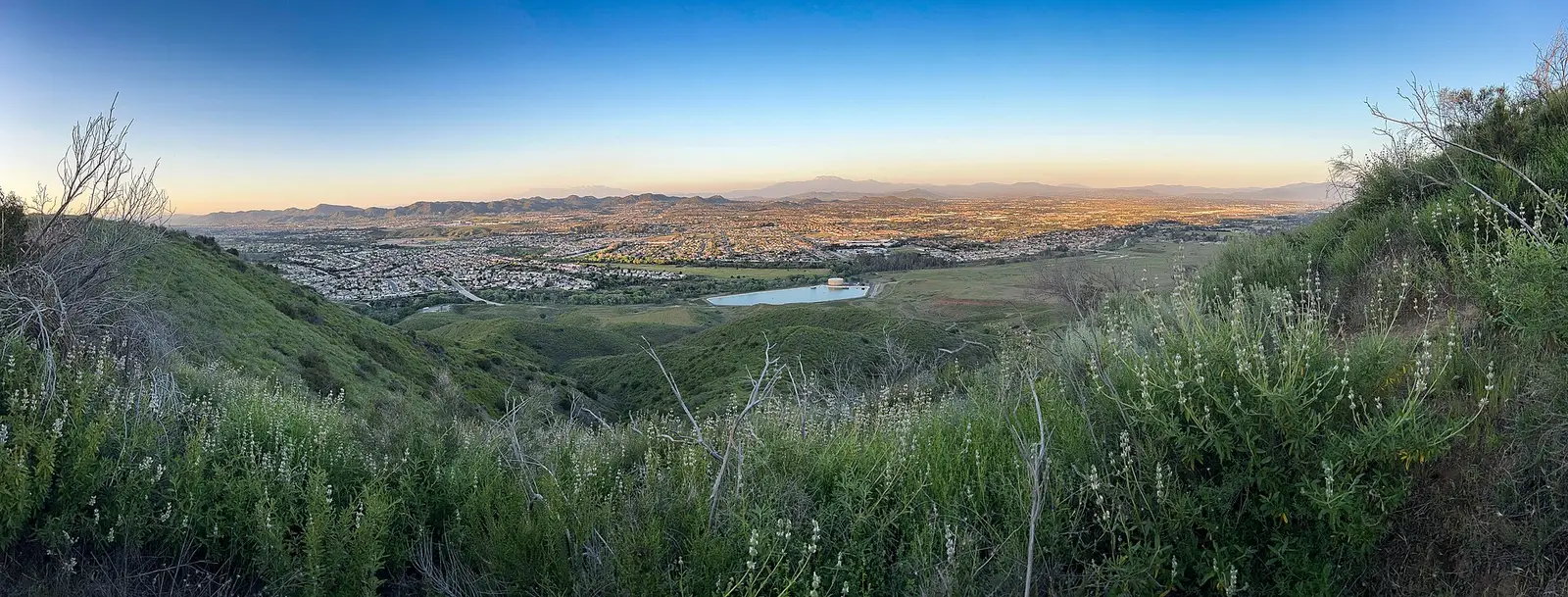
Murrieta incorporated on July 1, 1991 with roughly 24,000 residents; by the 2010 census it counted 103,466. Nearly all of its association-governed housing was built inside that growth run, and the results define the city today. The Colony at California Oaks, a gated 55+ community of 1,501 homes, went up in phases between 1989 and 2005 around California Oaks Golf Club, a course open to public play. Bear Creek, a guard-gated enclave in the foothills below the Santa Rosa Plateau, grew up around Bear Creek Golf Club, the private Jack Nicklaus Signature course established in 1982. Guard-gated Greer Ranch added 693 detached homes off Clinton Keith Road in the early 2000s, while family-oriented master plans filled the California Oaks corridor, the west-side hills, and the Murrieta Hot Springs area the city annexed in 2002.
A compressed construction timeline creates a compressed replacement timeline, and that is where generic reserve studies fail Murrieta boards. When a community's roofs, streets, pools, gates, and clubhouse all date to the same three-year build-out, their second and third life cycles arrive in waves rather than trickles — and inland heat, intense UV, and sharp day-night temperature swings age those components faster than the mild-climate tables most studies borrow. Apex Reserve Group, an Irvine-based reserve study firm, builds each Murrieta study around your community's actual build era, component inventory, and exposure, so the funding plan matches the wave that is actually coming.
Why Murrieta Associations Need Current Reserve Studies
Murrieta's core reserve problem is synchronization. Components installed together wear out together, and most of this city was installed together. A community that opened in the late 1990s is now 25 to 30 years old — past its first paint and roofing cycles and moving into heavier work: asphalt reconstruction on private streets, pool replastering and equipment replacement, clubhouse interiors, gate operators, and monument walls. The climate compounds the math. Murrieta's long, arid summers bring persistent UV and heat, followed by genuinely cold winter nights, and that thermal cycling is hard on stucco, elastomeric coatings, composition shingles, asphalt, and pool decks. Useful-life assumptions calibrated for temperate coastal zones quietly overstate how long these components last here. The gated pattern raises the stakes further: communities such as Bear Creek, Greer Ranch, and The Colony maintain their own streets, gates, and guard facilities — infrastructure a city public-works budget covers in ungated neighborhoods. A study built on a recent site inspection lets a board sequence those obligations deliberately instead of discovering them through a special assessment.
Bear Creek, California Oaks, and the Clinton Keith Corridor: Murrieta's Association Landscape
On the west side, Bear Creek occupies the foothills beneath the Santa Rosa Plateau — a guard-gated community organized around Bear Creek Golf Club, the private Jack Nicklaus Signature course established in 1982, with a master association responsible for gates, private streets, and extensive slope and perimeter areas at the wildland edge. Nearby Copper Canyon, built out between 1998 and 2001, offers a telling contrast: it is a master-planned neighborhood with no HOA at all, a reminder that Murrieta's association map does not simply mirror its subdivision map. In the center of the city, the California Oaks master plan anchors the ground between I-15 and I-215, and within it The Colony at California Oaks operates as a gated 55+ community of 1,501 single-family homes built in phases from 1989 to 2005, with three gated entrances, a large clubhouse, and the California Oaks Golf Club course — formerly known as The Colony Country Club — threading the lots. Along Clinton Keith Road, guard-gated Greer Ranch spreads 693 detached homes across 550 hilly acres with a clubhouse, pool, and a private trail network through more than 200 acres of open space — a component list weighted toward slopes, trails, and fencing rather than the flat-tract standard. To the east, the Murrieta Hot Springs area, annexed in 2002, and the corridors around it hold newer planned developments alongside the city's smaller townhome and condominium associations. No two of these patterns share a component list, and every Apex study starts by getting that list right.
What California Law Requires
The Davis-Stirling Act sets the baseline for every Murrieta association. Civil Code Section 5550 requires most of California's common interest developments to commission a reserve study grounded in a diligent visual inspection of the property, to repeat that inspection at least once every three years, and to review and adjust the figures annually in the years between. Civil Code Section 5300 then carries the results to the members: reserve funding status, the major-component schedule, and the assessment outlook must be disclosed in the annual budget report. SB 326 layers a separate structural requirement onto condominium projects — elevated wood-framed balconies, decks, stairways, and walkways must be inspected by a licensed structural engineer or architect — a list AB 2114 expanded in July 2024 to include licensed civil engineers — and the statutory deadline for that first inspection was January 1, 2025, a date that has already passed. Because Murrieta's stock leans heavily toward detached single-family planned developments, many associations here sit outside SB 326's reach; the city's townhome and condominium communities with elevated wood-framed elements do not. For those boards, the inspection findings belong inside the reserve study, because a flagged walkway or deck rarely keeps its textbook remaining life.
Our Reserve Study Services in Murrieta
Full Reserve Study — A component-by-component field inspection paired with a 30-year funding model, calibrated to the build eras and inland exposure of Murrieta's 1990s and 2000s communities. Typical delivery: 3 to 4 weeks. Reserve Study Update With Site Visit — A fresh walk-through that satisfies Civil Code Section 5550's three-year inspection requirement and re-anchors useful lives to observed conditions rather than aging projections. Typical delivery: 2 to 3 weeks. Off-Site Annual Update — A desk-based refresh of your funding plan and disclosure figures in the years between inspections, keeping the annual budget report accurate and compliant. Typical delivery: 1 to 2 weeks.
Murrieta Communities We Serve
Apex prepares reserve studies throughout the city, including The Colony at California Oaks, Bear Creek, Greer Ranch, the broader California Oaks area, the Murrieta Hot Springs area, historic downtown Murrieta, and communities along the Clinton Keith Road and Los Alamos Road corridors. Some Murrieta neighborhoods, such as Copper Canyon and Murrieta Oaks, were built without an HOA — there is no association there to commission a reserve study. We also serve associations just beyond the city line, including Spencer's Crossing, the master-planned community in neighboring unincorporated French Valley that carries Murrieta addresses.