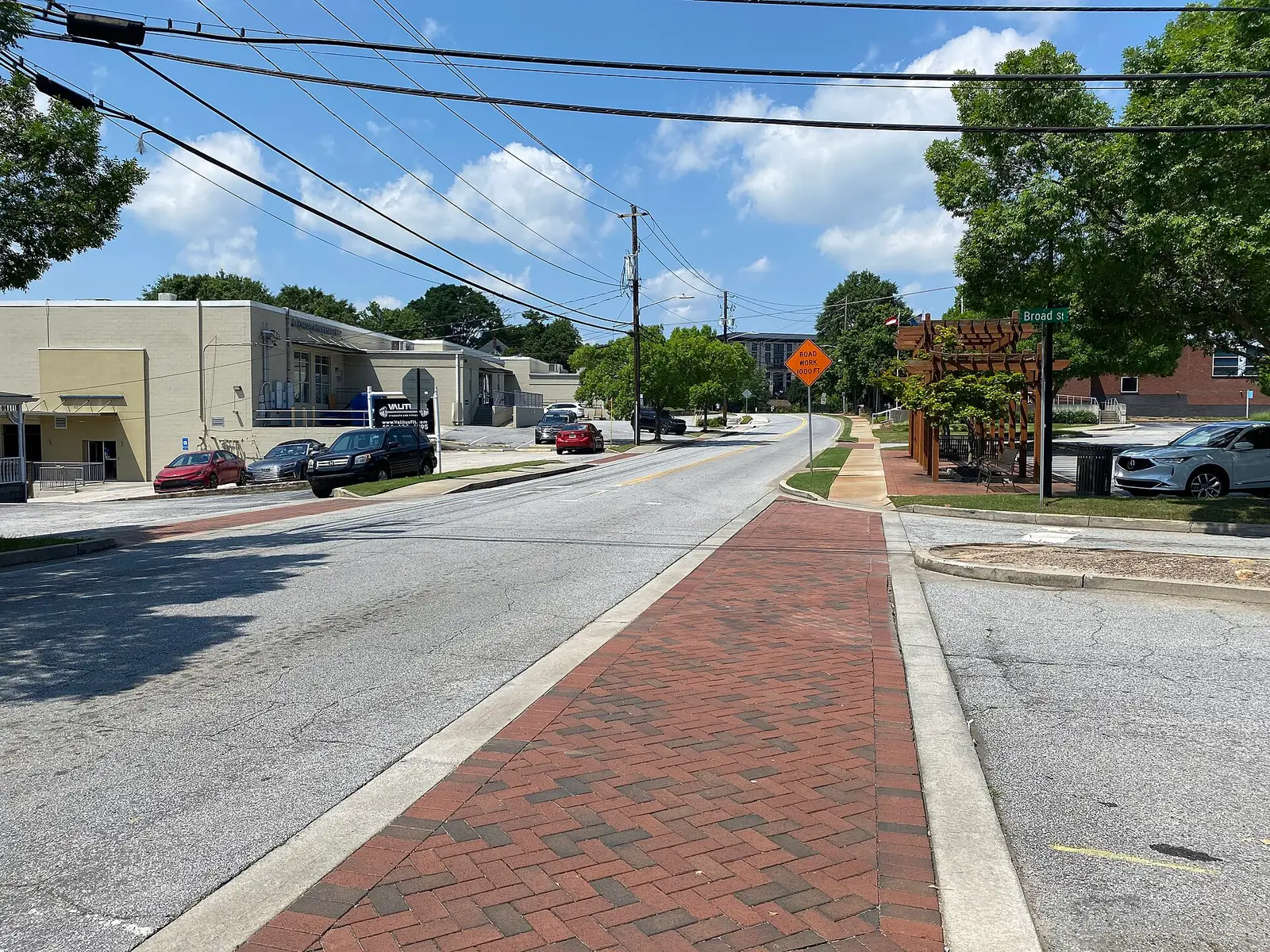
Chamblee sits in northern DeKalb County, and its association-governed housing reflects a town that has reinvented itself more than once. The bones are mid-century: subdivisions such as Huntley Hills, established in the early 1960s, and the 1950s ranch blocks of Keswick Village and Sexton Woods — the latter split between Chamblee and neighboring Brookhaven — still define much of the residential map. Layered on top is a wave of newer construction — stacked-townhome and condominium communities such as Dresden Heights off Dresden Road, built in phases between 2008 and 2020, plus the mid-rise and mixed-use projects that have clustered around the Chamblee MARTA station and the downtown core since the city's population roughly tripled to more than 30,000 through annexations in 2010 and 2013. The result is a compact city where a 1960s homeowner association and a five-year-old condominium can share a ZIP code and almost nothing else.
That range is exactly why an off-the-shelf reserve study tends to misfire in Chamblee. A townhome community finished last decade carries a component list built around shared roofs, private drives, and stormwater detention; an older single-family HOA may be responsible mainly for entrance monuments, a pool, and aging landscaping; and a mid-rise near Antique Row brings elevators, structured parking, and a full building envelope into the picture. Apex Reserve Group is based in Irvine, California, and prepares each Chamblee study around the property that actually exists — its construction era, its components, and the way metro Atlanta's climate is aging them. A team member based in the Atlanta area performs the on-site inspection in person, so the numbers rest on observed condition rather than a template.
Why Chamblee Associations Need Current Reserve Studies
Reserve planning in Chamblee runs on two clocks at once. The older one belongs to the mid-century stock: ranch and split-level neighborhoods and the subdivisions folded in through annexation, many of them now well past the age at which roofs, private paving, wood elements, and pool systems reach the end of their service lives. The newer clock belongs to the townhome and condominium communities built during the growth surge of the 2010s. Those associations are only now entering their first real replacement cycle — the roofing, sealants, exterior paint, and mechanical equipment installed at construction are approaching the point where deferral turns into one large, simultaneous bill. Standard useful-life tables assume a temperate national average and a property that ages precisely on schedule; in Chamblee's heat and humidity, several exterior components wear faster than those tables predict. A current study grounded in an on-site inspection trades guesswork for dated, costed projections your board can fund from monthly dues instead of an emergency assessment.
From Huntley Hills Ranches to MARTA-Station Townhomes: Chamblee's Association Map
Chamblee folds several housing generations into a few square miles. Downtown and the blocks around the MARTA station form the densest layer, where Antique Row's historic storefronts sit beside newer mid-rise condos, live-work lofts, and the infill advancing through projects like the Chamblee Town Center redevelopment; reserve components here run to elevators, decks, structured parking, and building envelopes rather than the roofs and asphalt that dominate suburban budgets. Radiating out from the core are the single-family associations — Huntley Hills, established in the early 1960s and annexed in 2010; the 1950s ranch fabric of Keswick Village and Sexton Woods (the latter partly in Brookhaven); and the Dresden-corridor and Beverly Woods neighborhoods — where an association's obligations often center on entrances, private roads, drainage, and shared amenities rather than the homes themselves. Between the two sit the stacked-townhome and condominium communities off Dresden Road and along the Peachtree corridor, and the international commercial spine of Buford Highway that gives the area much of its character. Each of these forms calls for a different component inventory, and we build the study to match yours.
What Georgia Law and Your Lenders Expect
Georgia does not impose a statewide requirement to commission a reserve study or to fund reserves to any set level, so the obligation reaches Chamblee boards from three other directions. The first is your own paperwork: many declarations, covenants, and bylaws written for local associations call for periodic reserve funding or a reserve analysis, and a board that disregards its own governing documents exposes its members to liability. The second is statute working by implication rather than command. The Georgia Condominium Act (O.C.G.A. Title 44, Chapter 3) requires a condominium's budget to itemize reserves for deferred maintenance and depreciation, and the opt-in Georgia Property Owners' Association Act supplies a governance framework many communities adopt; neither orders a reserve study, yet both sit atop the fiduciary duty a board owes its members, and knowingly leaving foreseeable capital costs unfunded is difficult to defend. The third, and increasingly the sharpest, is lending. FHA, Fannie Mae, and Freddie Mac all weigh reserve adequacy when deciding whether units in a condominium qualify for financing, generally looking for reserve contributions near ten percent of the annual budget or a recent, compliant reserve study — and scrutiny of deferred maintenance has tightened sharply since the 2021 Surfside collapse. That bar is rising: for loan applications dated on or after January 4, 2027, Fannie Mae and Freddie Mac raise the reserve threshold to fifteen percent of budgeted assessment income unless a current reserve study supports a different figure. For Chamblee's many townhome and condominium associations near the MARTA station, that change turns a defensible reserve study into a financing question, not only a budgeting one.
Our Reserve Study Services in Chamblee
Full Reserve Study — A ground-up component inventory, on-site inspection, and 30-year funding plan for a Chamblee property that has never had a study or needs a fresh baseline, with useful lives set against local heat, humidity, and tree-canopy conditions. Typical delivery: 3 to 4 weeks.
Reserve Study Update With Site Visit — A return inspection every three to five years that captures completed projects, added components, and how the property has actually aged since the last report. Typical delivery: 2 to 3 weeks.
Off-Site Annual Update — A remote refresh for the years between site visits that keeps contributions, inflation assumptions, and your funding plan current. Typical delivery: 1 to 2 weeks.
Chamblee Communities We Serve
Our service area covers associations across Chamblee and the surrounding northern-DeKalb communities, including Downtown Chamblee and the MARTA-station district, Antique Row, Huntley Hills, Sexton Woods, Keswick Village, Beverly Hills and Beverly Woods, the Dresden Drive and Dresden East corridor, the Buford Highway international corridor, and the newer townhome and condominium developments clustered along the Peachtree Road and New Peachtree Road corridors. We also serve associations in adjacent northern-DeKalb cities such as Brookhaven, Doraville, Dunwoody, and Tucker across the metro Atlanta area.