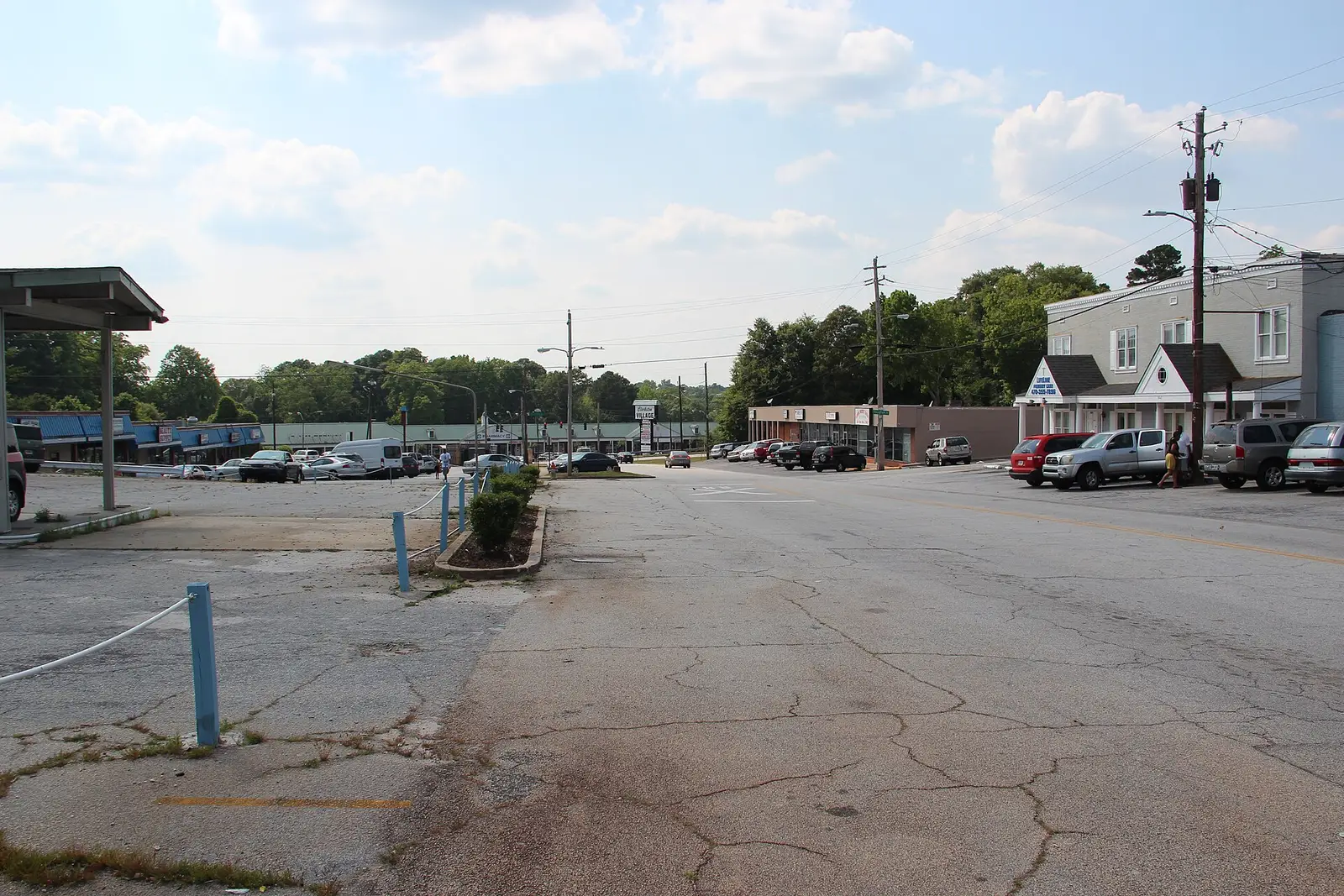
Clarkston packs an unusually dense mix of association housing into a footprint of less than two square miles. The condominium stock skews older: Plantation Condominiums, off Montreal Road, dates to 1971 and still runs a clubhouse and pool, while two-story communities such as Tree Creek Condominiums and Creekstone Condominium Homes both went up around 1974. Around them sit older detached-home subdivisions like Milam Park and Clark Estates — single-family homes on compact, tree-shaded lots — plus garden-apartment and townhome rows strung along Market Street and the Montreal Road corridor. With roughly 14,700 residents at the 2020 census packed into that small footprint, Clarkston is densely settled for a Georgia city, and its housing base runs decidedly older than the metro-Atlanta average.
A reserve study assembled from national averages does not fit a place built like this. A 1971 condominium with an aging clubhouse, original plumbing, and a pool sitting under a heavy oak canopy ages nothing like a 2015 townhome row, yet a template study puts their roofs, decks, and coatings on the same clock. Layer in Clarkston's humid-subtropical summers, red-clay soils, and the mildew and standing moisture that come with dense tree cover, and the standard useful-life tables tend to read optimistic. Apex Reserve Group works from Irvine, California, and sends a team member based in the Atlanta area to walk your property in person, so the projections reflect the buildings you actually have and the conditions actually wearing on them.
Why Clarkston Associations Need Current Reserve Studies
Two forces make reserve planning urgent in Clarkston: the age of the housing and the climate working on it. A large share of the city's condominiums and apartments were built in the late 1960s and 1970s, which puts them well into the replacement windows for roofs, siding, parking surfaces, and mechanical systems — the big-ticket items a reserve fund exists to absorb. When a board leans on a stale study, or none at all, those costs do not vanish; they resurface as emergency special assessments that fall hardest on the moderate-income households who make up much of Clarkston. A current study paired with an on-site inspection swaps guesswork for a dated, prioritized schedule, letting the association build reserves gradually instead of demanding a lump sum the year a roof gives out. It also puts on record that the board is planning responsibly — something owners notice and anyone underwriting a mortgage in the community will check.
Older Condominiums, Mid-Century Subdivisions, and the Montreal Road Corridor
Clarkston's association landscape is compact but far from uniform. The older condominium communities — Plantation Condominiums from 1971, and Tree Creek and Creekstone Condominium Homes from around 1974 — carry the component lists that define reserve budgets here: aging shingle and low-slope roofs, wood and hardboard siding, surface parking, shared water and sewer laterals, and in several cases clubhouses and pools now approaching half a century old. Detached-home subdivisions such as Milam Park and Clark Estates carry fewer shared assets — entry signage, common landscaping, a private drive or a detention pond — but their boards still need a plan for them. Along Market Street and Montreal Road, garden apartments and newer townhome rows add flat-roof buildings, retaining walls, and stormwater features of their own. The city's recent streetscape investment — wider sidewalks, lighting, and new MARTA bus shelters — has sharpened the walkable core, yet none of it reaches past each association's property line, where the reserve fund does its quiet work.
What Georgia Law and Your Lenders Expect
Georgia has no statute ordering associations to commission reserve studies; the obligation arrives from three other directions instead. First, your own governing documents. Many Clarkston declarations and bylaws — especially those drafted for the condominium communities — call for reserve funding or periodic financial review, and a board that disregards its own recorded documents invites claims from owners. Second, state law that circles the question without settling it. The Georgia Condominium Act (O.C.G.A. Title 44, Chapter 3) governs the city's older condominiums and expects the annual budget to carry reserve line items for deferred maintenance and depreciation, though it fixes no study requirement and no funding percentage; the Georgia Property Owners' Association Act is an opt-in framework a community must formally adopt, and it likewise stops short of mandating a study. What both share is a fiduciary standard — directors owe the association a duty of care, and knowingly leaving a foreseeable roof or paving bill unfunded is difficult to defend. Third, and increasingly the sharpest pressure: mortgage lenders. FHA, Fannie Mae, and Freddie Mac all review a condominium project's budget before backing a loan inside it, generally looking for at least ten percent of the budget routed to reserves or a current reserve study in its place, and their attention to deferred maintenance tightened sharply after the 2021 Surfside collapse. For loan applications dated on or after January 4, 2027, Fannie Mae and Freddie Mac lift that floor from ten to fifteen percent of the annual budget — unless the association holds a reserve study completed within the past three years and funds at the highest level it recommends. For Clarkston's older garden and mid-rise condo stock, that shift turns a professional study from a formality into a condition of keeping units financeable.
Our Reserve Study Services in Clarkston
Full Reserve Study — A ground-up inspection of every common-area component, with photo documentation, remaining-life estimates, and a 30-year funding plan built around your association's specific buildings and budget. Typical delivery: 3 to 4 weeks.
Reserve Study Update With Site Visit — A return visit, generally every three to five years, to re-check conditions, fold in completed projects, and reset the funding plan as older buildings change faster than paper projections assume. Typical delivery: 2 to 3 weeks.
Off-Site Annual Update — A between-visit refresh that adjusts for inflation, recent spending, and your current reserve balance without a new site inspection, keeping the plan and budget aligned year to year. Typical delivery: 1 to 2 weeks.
Clarkston Communities We Serve
Our Clarkston service area covers associations across the whole of this compact city and the DeKalb County neighborhoods wrapped around it. That includes older condominium communities such as Plantation Condominiums off Montreal Road, along with Tree Creek and Creekstone Condominium Homes, the established detached-home subdivisions of Milam Park and Clark Estates, and the townhome and garden-apartment associations along Market Street and the Indian Creek and Kensington MARTA corridors. Nearby, our service area extends to associations in the DeKalb cities of Stone Mountain, Tucker, Avondale Estates, Pine Lake, and Decatur, along with the unincorporated community of Scottdale. If your board sits anywhere in or around Clarkston, we can inspect on site and build the study around your community's actual components.