Tucker became a city only in 2016, but the neighborhoods inside its limits are decades older than the government that now oversees them. When DeKalb County voters approved cityhood by roughly three to one in a 2015 referendum, the new city inherited a housing stock built largely during the unincorporated era: 1960s and 1970s ranch and split-level homes across established subdivisions, 1970s and 1980s multi-story houses on daylight basements, and the wide-lot Smoke Rise community that took shape in the 1960s and straddles the eastern edge of town along the Stone Mountain line. Around the Northlake district and along corridors like Lawrenceville Highway, newer townhome and condominium developments have filled in since, giving Tucker associations a range that runs from small self-managed condo groups to large-lot neighborhood HOAs and modern attached-home communities.
That mix is the reason an off-the-shelf reserve study rarely fits a Tucker community. A 1960s ranch subdivision with shared entrance monuments, a stormwater pond, and a tree-canopied road network carries nothing like the component list of a 2015 townhome enclave built around shared roofs, siding, and private drives — and both age differently under metro Atlanta's heat, humidity, and red-clay soils than the national useful-life tables assume. Apex Reserve Group is based in Irvine, California, and prepares studies built around what a specific association actually owns and how the local climate is wearing it down. A team member based in the metro Atlanta area performs the on-site inspection in person, so the figures behind your funding plan come from your property rather than a desktop estimate.
Why Tucker Associations Need Current Reserve Studies
Two things make reserve planning urgent for Tucker boards: the age of the housing and the climate it sits in. Much of the city's association stock dates to the unincorporated decades between the 1960s and the 1990s, which means roofs, private streets, retaining walls, wood siding, decks, and mechanical equipment installed during original construction are now well into — or past — their expected service lives. Communities that formed in that era often set assessments years ago and never revisited them against real replacement costs. A study that reflects current conditions and current pricing tells a board when each major component is likely to fail and how much to set aside now, so the bill lands as a planned contribution instead of an emergency special assessment. For newer townhome communities near Northlake and along Lawrenceville Highway, a first study fixes that baseline before the opening wave of shared-roof and paving replacements arrives. For older neighborhoods, an updated study catches the components a decades-old budget quietly stopped funding.
From Smoke Rise Ranches to Northlake Townhomes: Tucker's Association Landscape
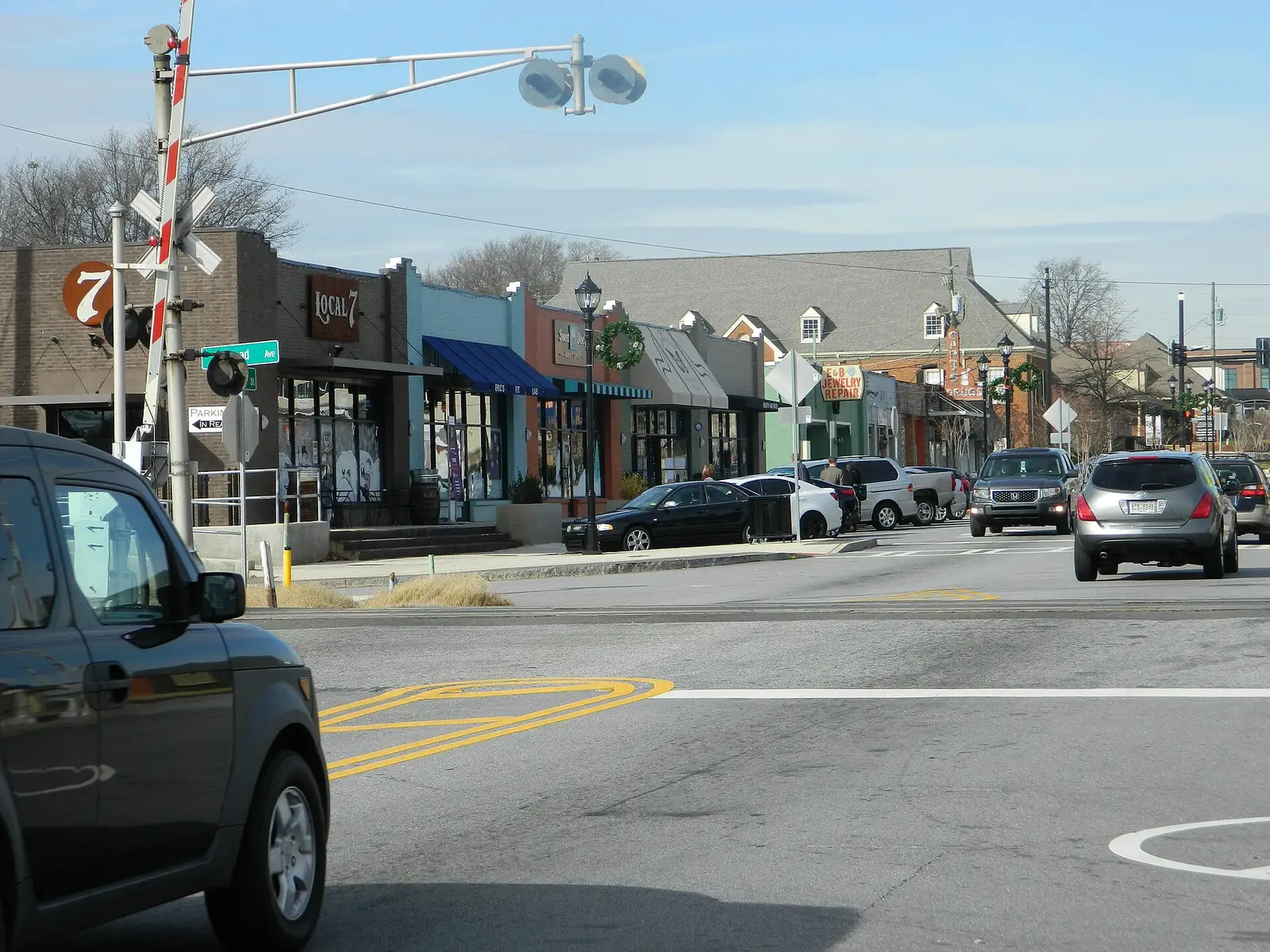
Tucker's associations sort roughly by era and building type. Straddling the city's eastern edge along the Stone Mountain line, Smoke Rise is a large 1960s community of roughly two thousand homes spread across more than ten smaller neighborhoods, defined by wide streets, big wooded lots, and shared entrance and common-area features that fall to the HOA. Established subdivisions such as Idlewood hold the ranch and split-level houses that filled Tucker through the 1960s and 1970s, while nearby Woodridge added condominium-style attached homes in the mid-1980s, where reserve components tend to center on entrance monuments, signage, shared drives, drainage, and landscaping rather than buildings. The Enclave on La Vista, a gated development of luxury homes near the Northlake district, adds the access-control and amenity components — gates, private streets, common landscaping — that larger detached-home associations carry. Closer to Northlake Mall, now sold and under redevelopment, and along Lawrenceville Highway toward Jimmy Carter Boulevard, newer townhome and condominium communities own the roofs, siding, and paving that drive attached-housing budgets. Downtown Tucker, still centered on the Main Street railroad corridor where the town grew up in the 1890s, anchors the whole picture. Each of these calls for its own component inventory, and we build the study to match.
What Georgia Law and Your Lenders Expect
Georgia has no statewide law that requires an HOA or condominium association to commission a reserve study or fund reserves to a set level. What governs a Tucker board instead comes from three directions. First are your own recorded documents — the declaration, covenants, and bylaws — which frequently obligate the association to maintain reserves or revisit them on a schedule; a board that ignores its own governing documents exposes its members to claims. Second is Georgia statute. Condominiums fall under the Georgia Condominium Act (O.C.G.A. Title 44, Chapter 3), whose budget provisions call for reserve line items covering deferred maintenance and depreciation and require reserve funds to be held in separate accounts, though the Act stops short of mandating a formal study or a funding percentage. A property owners' association can elect coverage under the Georgia Property Owners' Association Act by recording that choice in its declaration. Neither statute forces a reserve study, but both leave directors bound by their fiduciary duties of care and loyalty — and a board that fails to plan for a foreseeable roof, paving, or structural cost can be held answerable for the shortfall. Third is the lending market, which increasingly sets the practical standard. FHA, Fannie Mae, and Freddie Mac review a condo project's reserves before approving mortgages in it, generally looking for at least ten percent of the annual budget directed to reserves or a current reserve study that supports the funding level. Attention to deferred maintenance has sharpened across the industry since the 2021 Surfside collapse, and Fannie Mae and Freddie Mac are lifting that reserve floor from ten to fifteen percent for loan applications dated on or after January 4, 2027. For Tucker's older attached-housing stock especially, a study a lender will accept can be the difference between a marketable unit and one a buyer cannot finance.
Our Reserve Study Services in Tucker
Full Reserve Study — A complete on-site inspection, full component inventory, and 30-year funding plan built from the ground up, with useful-life estimates adjusted for the local heat, humidity, and clay soils. The right starting point for a Tucker association that has never had a study or needs a fresh baseline. Typical delivery: 3 to 4 weeks.
Reserve Study Update With Site Visit — A return visit every three to five years to re-inspect components, log completed projects and new conditions, and reset the funding plan against current costs. Well suited to Tucker's aging ranch and split-level neighborhoods, where field conditions move faster than a paper projection. Typical delivery: 2 to 3 weeks.
Off-Site Annual Update — A remote refresh in the years between site visits that updates the plan for inflation, finished work, and your latest reserve balance, keeping contributions and disclosures current. Typical delivery: 1 to 2 weeks.
Tucker Communities in Our Service Area
Our service area covers associations across Tucker and the surrounding parts of DeKalb County, including Smoke Rise, Idlewood, Woodridge, the Northlake area, the Enclave on La Vista, downtown Tucker along the Main Street corridor, and the newer townhome and condominium developments near Lawrenceville Highway and Jimmy Carter Boulevard. We also inspect for associations in adjacent communities such as Stone Mountain, Clarkston, and Chamblee, and in the unincorporated pockets of DeKalb County near the city's edges. Wherever your community sits, the study is built on an in-person inspection by our metro Atlanta-based team member.