Chattahoochee Hills is unlike anywhere else a board serves in metro Atlanta. Voters approved cityhood by an 83 percent margin in June 2007, the new government began operating that December, and the city — renamed from Chattahoochee Hill Country in 2008 — stretches across more than 30,000 acres of southwest Fulton County along the Chattahoochee River while holding only about 3,000 residents. Zoning permanently steers roughly 70 percent of that land into preserved forest, farm, and meadow, which concentrates nearly all association-governed housing into Serenbe, the nationally profiled new-urbanist agrihood whose first homes broke ground in the Selborne hamlet in 2004. Growth since has arrived in distinct waves: Grange, built around the 25-acre organic Serenbe Farms; Mado, the wellness hamlet with the community's most contemporary architecture; the Victorian-inspired, 40-home Overlook; and Spela, the family-focused fourth hamlet now taking shape. Around them, historic crossroads settlements such as Campbellton, Rico, and Rivertown mark a countryside of estates and working farmland.
That pattern — hamlet-sized construction cohorts inside a city organized around preservation — is exactly what a template reserve study cannot capture. Useful-life tables written for a conventional subdivision have no line for live-work buildings with commercial terrace levels, condominium flats above storefronts, omega-shaped hamlet streetscapes stitched together by some 20 miles of trails, or stormwater features engineered under a conservation zoning code. And because each hamlet was delivered as a cohort, its major replacements come due in clusters rather than trickling in. Apex Reserve Group is headquartered in Irvine, California, and our team member based in the Atlanta area performs the on-site inspections here, so the component inventory reflects what actually stands in Chattahoochee Hills rather than what a spreadsheet assumes.
Why Chattahoochee Hills Associations Need Current Reserve Studies
Selborne's earliest cottages and townhomes have now passed the twenty-year mark, which in Georgia's humid subtropical climate means they are deep into their first major replacement cycle: shingles, exterior stains and paints, wood porches and steps, fencing, and flatwork installed in the mid-2000s are reaching or outliving the service lives the original budgets assumed. Heat and humidity are the quiet drivers — coatings chalk and peel sooner than national tables predict, mildew keeps pressure-washing and repainting on short rotations, and shaded wood elements beneath heavy tree canopy stay damp long enough to rot from the fastener holes outward. The Piedmont's dense, slow-draining red clay shifts modestly with seasonal moisture, working on walks, walls, and buried drainage year after year, and an occasional hail or ice storm can reset a roof's remaining life overnight. The newer neighborhoods need attention for the opposite reason: Overlook and Spela components should be baselined while builder-era condition is still documentable, so contributions start on schedule instead of a decade late. And the arithmetic here is unforgiving — far fewer owners share each large project than in a typical suburb, so a funding gap that a 2,000-home community absorbs as a modest dues increase can arrive in Chattahoochee Hills as a bruising special assessment. A current study built on a genuine site inspection turns those exposures into a schedule a board can fund deliberately.
Selborne to Spela: How Serenbe's Hamlets Shape Reserve Planning
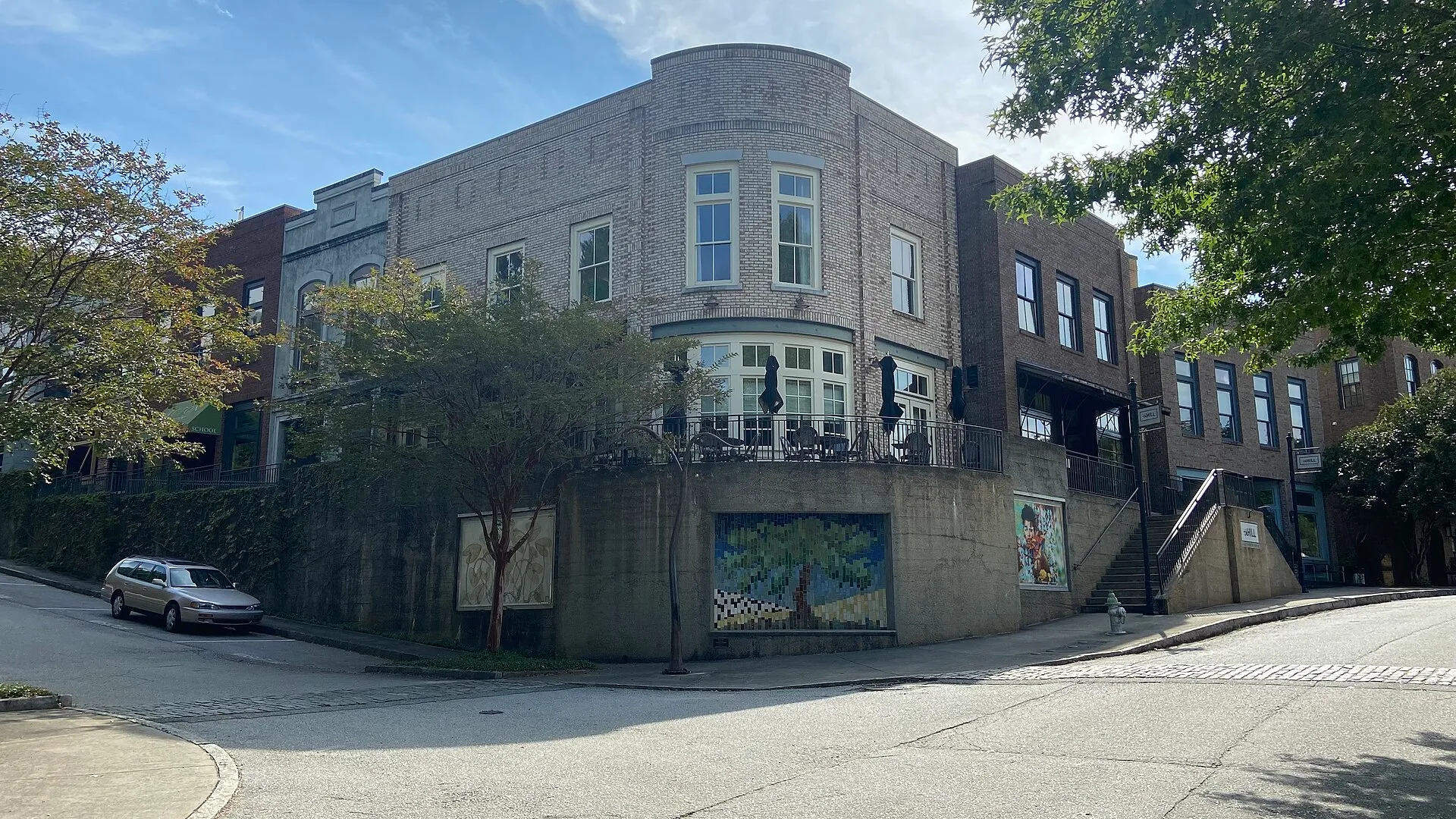
Each phase of Serenbe carries a different component signature. Selborne, the arts-focused original, mixes 2004-era cottages with three-story townhomes and live-work buildings whose ground floors hold shops and galleries — party walls, shared roof planes, and storefront waterproofing all belong in the inventory. Grange, the agriculture hamlet with its largely edible landscaping, adds farm-edge fencing, garden infrastructure, and planted systems that behave nothing like a standard entry-monument bed. Mado, organized around health and wellness, brought courtyard townhomes, live-work units with terrace-level studios, and minimalist contemporary detailing that rewards closer inspection intervals in a rain-heavy climate. Overlook, the 40-home Victorian-inspired neighborhood rising between Mado and Spela, clusters white-painted porch-wrapped houses around eight modern townhomes — abundant painted trim and exposed porch structure that this climate will test early. Spela, planned as a family-oriented hamlet with a central park, raises transition-era questions about what the association will ultimately own and when funding should begin. Outside Serenbe, associations are sparse by design: the countryside around Campbellton — seat of the former Campbell County from 1828 to 1870 — and the crossroads of Rico and Rivertown is dominated by acreage properties, with city holdings like the roughly 800-acre Cochran Mill Park keeping the green frame intact. Where small associations do exist out here, private road segments, gravel drives, gates, and detention ponds tend to be the components that decide the budget.
What Georgia Law and Your Lenders Expect
Georgia has no statute compelling an association to commission a reserve study — where the obligation exists on paper, it lives in your own declaration and bylaws, and reading those documents is where every board should start. Condominiums here are organized under the Georgia Condominium Act (O.C.G.A. Title 44, Chapter 3), and some planned communities have recorded the election that brings them under the opt-in Georgia Property Owners' Association Act; both statutes govern budgets, assessments, and collections, and neither dictates a reserve study or a minimum reserve balance. What they leave fully intact is the board's fiduciary duty. Directors who can see a hamlet's worth of mid-2000s roofs coming due and decline to plan for them are not exercising the care Georgia expects, and the emergency assessment that follows is precisely the kind of foreseeable harm that invites claims against a board. Lenders supply the teeth. Fannie Mae, Freddie Mac, and FHA project reviews generally look for roughly 10 percent of the annual budget flowing to reserves — or a compliant, current reserve study justifying a different number — and since the Surfside collapse in 2021, reviewers press far harder on deferred maintenance and unfunded repairs, with agency guidance slated for early 2027 raising the default reserve percentage for projects that lack a recent study. For Serenbe's condominium flats and live-work buildings, that scrutiny lands directly on resale: in a market this small and this distinctive, a unit conventional financing cannot touch has a very thin buyer pool.
Our Reserve Study Services in Chattahoochee Hills
Full Reserve Study — Our Atlanta-area inspector documents every common component in person — building envelopes, porches, hardscape, trail and path surfaces, stormwater structures — and we deliver a thirty-year capital plan built from observed condition rather than table defaults. Typical delivery: 3 to 4 weeks.
Reserve Study Update With Site Visit — We return on a three-to-five-year rhythm to re-score conditions, capture completed projects, and rebalance the funding plan before drift becomes a gap. Typical delivery: 2 to 3 weeks.
Off-Site Annual Update — A remote refresh for interim years that trues up costs for inflation, logs finished work, and keeps the study current for board budgeting and lender review. Typical delivery: 1 to 2 weeks.
Chattahoochee Hills Communities We Serve
We serve associations throughout the city of Chattahoochee Hills, including Serenbe's hamlets and neighborhoods — Selborne, Grange, Mado, Overlook, and Spela — along with communities near the historic settlements of Campbellton, Rico, Rivertown, Goodes, Friendship, and County Line, as well as the newer Cedar Grove community. We also work with boards in neighboring Palmetto, the City of South Fulton, and across the wider Chattahoochee Hill Country.