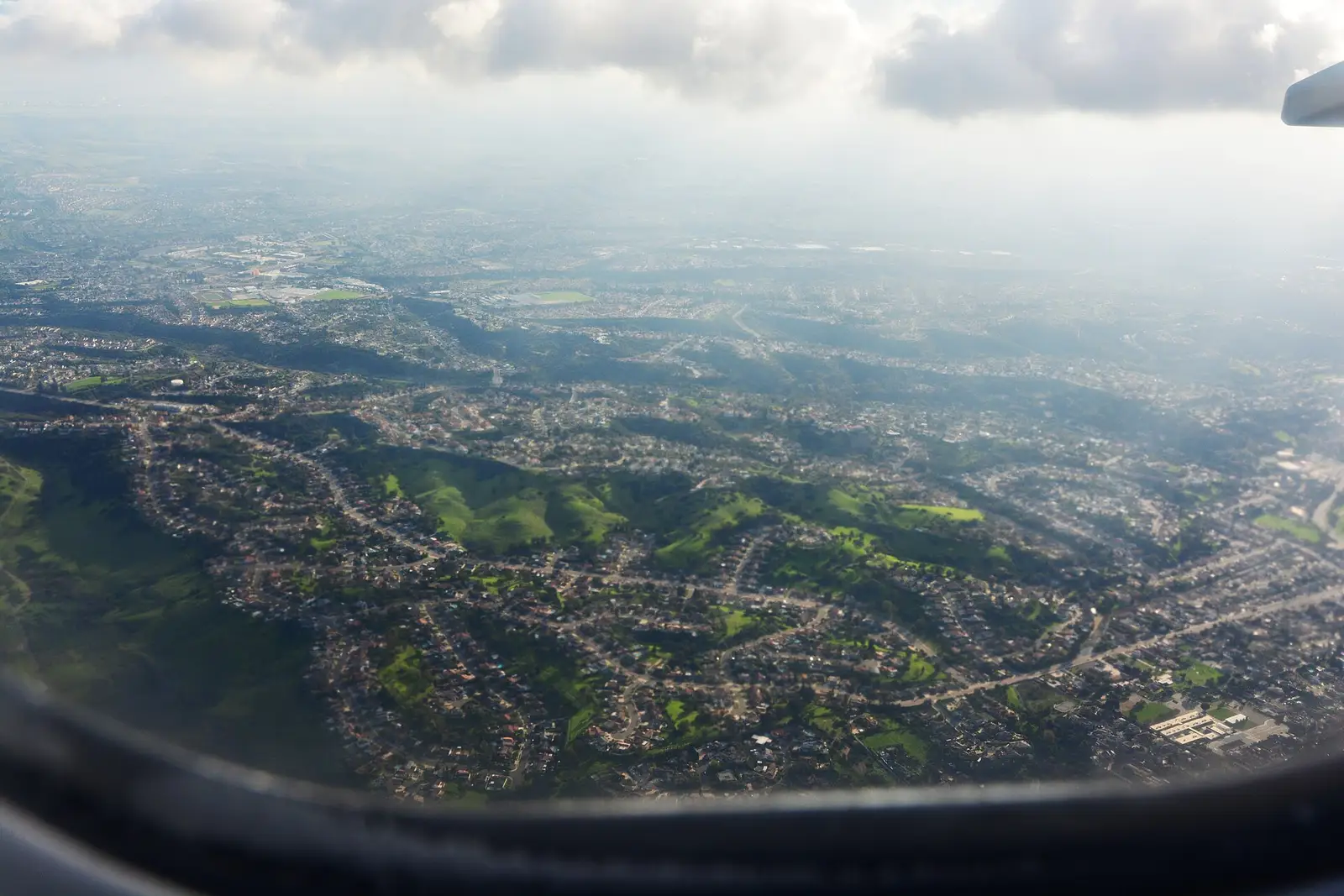
Chula Vista holds a vast stock of master-planned, association-governed housing, and almost all of it sits east of Interstate 805. EastLake opened its first neighborhoods, Hills and Shores, in the mid-1980s, added Greens in 1991 and Trails in the late 1990s, then completed the EastLake III neighborhoods of Vistas and Woods in the early 2000s, several of them wrapped around the course long known as EastLake Country Club, now the Enagic Golf Club at Eastlake. Rancho del Rey filled the central hills through the late 1980s and 1990s. Otay Ranch sold its first village homes in 1999 before growing into a chain of walkable villages that now reaches Millenia, a dense mixed-use district that broke ground around 2015. Between them sit Sunbow, begun in the late 1980s and largely completed with Sunbow II between the late 1990s and mid-2000s, along with San Miguel Ranch and Rolling Hills Ranch, both built out mostly in the early 2000s. West of the 805, older Chula Vista tells a different story: the historic Third Avenue downtown, the mid-century ranch neighborhoods of Hilltop and Castle Park, and the 1970s and 1980s condominiums scattered near San Diego Bay.
Those two halves of the city face nearly opposite pressures, which is why a generic reserve study serves neither one well. The eastern master-planned associations are large and amenity-heavy, with pools, clubhouses, sport courts, miles of trails, monument walls, and acres of slope landscaping, and many are now reaching their first major replacement cycle all at once under intense inland sun, dry heat, and Santa Ana winds. The older west-side condominiums raise a different set of questions: aging wood-framed balconies, dated common systems, and a measure of marine influence off the bay. Apex Reserve Group, an Irvine-based firm, prepares each Chula Vista reserve study to match what your association actually owns, the era it was built in, and the climate working on it, rather than a one-size template borrowed from another market.
Why Chula Vista Associations Need Current Reserve Studies
Much of Chula Vista's association housing is younger than owners think they need to worry about, and that is exactly the trap. Communities such as Otay Ranch, San Miguel Ranch, and Rolling Hills Ranch were built largely between 1999 and the mid-2000s, which means the durable components installed all at once at build-out are now reaching the end of their first life spans within a few years of one another. Asphalt overlays, pool plaster and equipment, clubhouse and cabana roofs, elastomeric wall coatings, play structures, sport-court surfaces, and large irrigation systems tend to bunch into a single wave of first replacements, and an association still leaning on its original developer-era funding plan is often badly short when that wave arrives. Chula Vista's inland heat, strong ultraviolet exposure, and periodic Santa Ana winds push many of these components toward the shorter end of their useful lives, while the older condominiums on the west side carry the added weight of age and, near the bay, some marine exposure. A current reserve study built on a fresh on-site inspection replaces optimistic build-out assumptions with real remaining-life estimates and a funding plan that can absorb that wave instead of breaking under it.
From EastLake and Otay Ranch to the West-Side Condos: Chula Vista's Association Map
East Chula Vista is where the scale is. EastLake, the city's pioneer master plan, spreads across neighborhoods like EastLake Hills, Shores, Greens, Trails, Vistas, and Woods, many organized around the country club and its golf course, with individual subdivisions typically carrying their own associations responsible for pools, greenbelts, and common landscaping. Otay Ranch runs south and east as a sequence of villages, Montecito among them, knit together by paseos, parks, and trails, and its newest quarter, Millenia, layers stacked condominium flats and podium buildings into a compact mixed-use grid. Rancho del Rey occupies the hills west of EastLake with 1980s and 1990s homes and long-established open-space maintenance areas, while San Miguel Ranch and Rolling Hills Ranch sit farther north against the preserve, their early-2000s associations maintaining trails, slopes, and recreation centers. Sunbow adds single-family homes, townhomes, and condominiums to the south, and Terra Nova rounds out the central corridor. West of Interstate 805 the pattern changes entirely: the Third Avenue downtown, mid-century ranch neighborhoods like Hilltop and Castle Park, and smaller condominium and townhome associations from the 1970s and 1980s near San Diego Bay. Each of these calls for its own component inventory, and we build the study around the one that is actually yours.
What California Law Requires
California's Davis-Stirling Act sets the baseline. Civil Code Section 5550 directs most common interest developments to complete a reserve study based on an on-site inspection at least once every three years and to review and update it in each year between inspections. Civil Code Section 5300 then requires the reserve findings, including the current funding level, projected contributions, and any assessment plans, to be summarized in the annual budget report distributed to every owner. A separate law, SB 326, applies specifically to condominium associations: it requires a licensed inspection of exterior elevated elements such as balconies, decks, stairways, and elevated walkways, with the first inspection due by January 1, 2025. That deadline is already behind us, so any Chula Vista condo association that has not completed one is past due. The requirement turns on construction rather than age: it reaches the older wood-framed condominium buildings west of Interstate 805, and it applies to the newer attached and stacked-flat product in Otay Ranch, Millenia, and Sunbow where those buildings carry wood-framed elevated balconies, decks, or walkways, though concrete podium construction, common in Millenia's newer buildings, may fall outside it. Inspection findings frequently reshape the balcony and walkway line items in a reserve study, which is why the two exercises belong together.
Our Reserve Study Services in Chula Vista
Full Reserve Study — A complete component inventory, on-site inspection, and 30-year funding plan, with useful lives set for Chula Vista's inland heat and ultraviolet exposure and, for west-side buildings, the marine influence off the bay. Typical delivery: 3 to 4 weeks.
Reserve Study Update With Site Visit — A periodic on-site reinspection, valuable for the large master-planned associations now moving through their first major replacement cycle, where real conditions shift faster than a desktop projection assumes. Typical delivery: 2 to 3 weeks.
Off-Site Annual Update — A remote refresh for the years between site visits that keeps your funding plan and Civil Code disclosures current. Typical delivery: 1 to 2 weeks.
Chula Vista Communities We Serve
We prepare reserve studies for associations across Chula Vista, including EastLake, Otay Ranch, Millenia, Rancho del Rey, San Miguel Ranch, Rolling Hills Ranch, Sunbow, Terra Nova, Bonita Long Canyon, Hilltop, Castle Park, the Greg Rogers area, the Third Avenue and downtown corridor, and other neighborhoods throughout eastern and western Chula Vista.