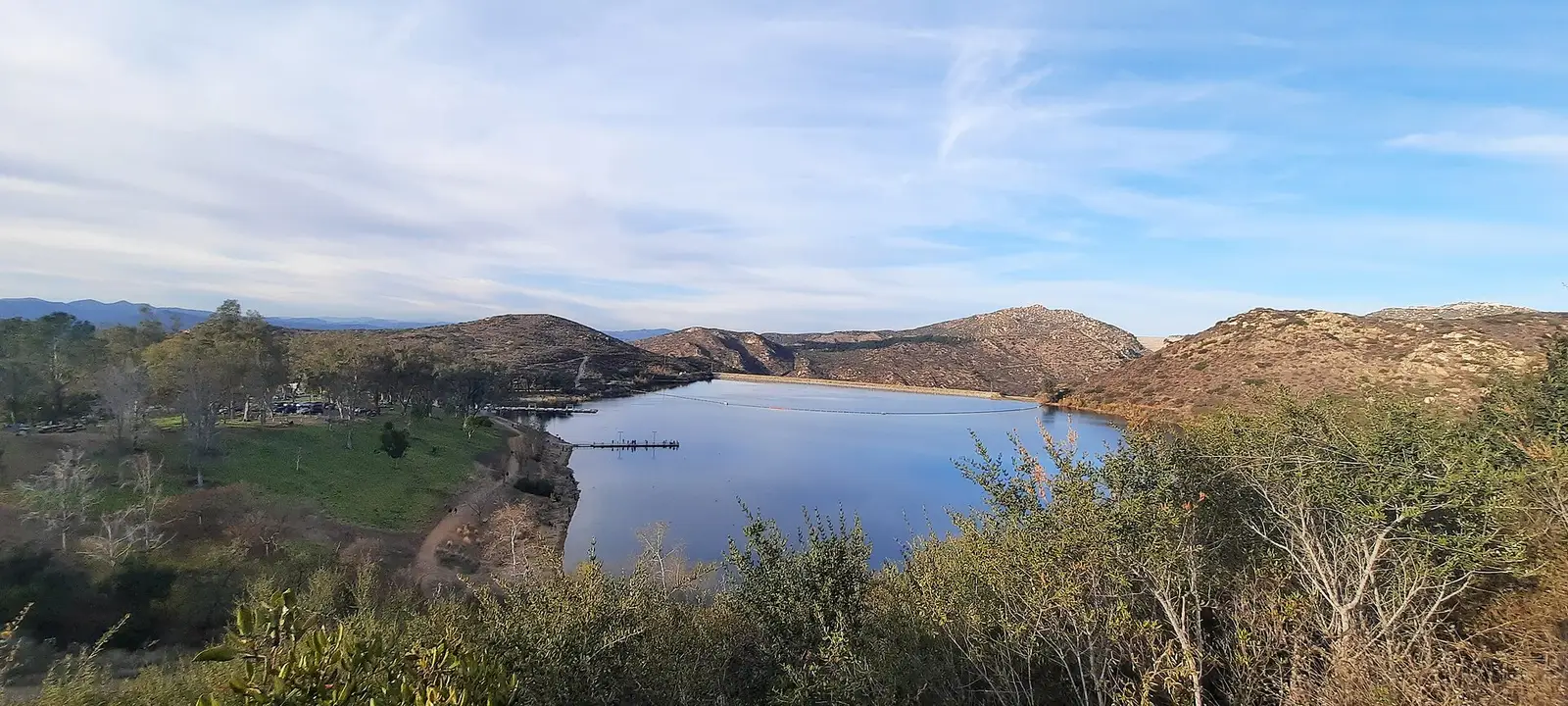
Poway calls itself "The City in the Country," and its association housing reflects that identity far more than the dense condominium towers found closer to the coast. The city's common interest developments lean toward planned unit developments, townhome communities, and larger-lot associations rather than mid-rise condos. Central Poway holds Rancho Arbolitos, a roughly 750-acre planned community reportedly built in phases by Standard Pacific beginning around 1984, its sub-neighborhoods sharing the Rancho Arbolitos Swim and Tennis Club that has operated since 1983. The Green Valley area — Estates, Highlands, and Summit — layers homes from the early 1960s through the 1990s across generous, often horse-friendly lots. In the northern hills, guard-gated estate communities such as The Heritage and the Old Coach Collection sit above Maderas Golf Club on multi-acre parcels built largely from the late 1990s into the 2000s. Smaller condominium and townhome associations exist too, including Silver Lake on Robison Boulevard and the townhome-style Stoneridge Chateaus, both dating to the 1970s.
That mix is why an off-the-shelf reserve study rarely fits a Poway association. A guard-gated estate community maintaining private roads, gates, and open-space slopes has almost nothing in common with a 44-unit 1970s condo community sharing a single pool, and both differ again from a townhome PUD responsible for greenbelts and shared drives. Add Poway's inland setting — hot, dry summers, high UV exposure, and a large share of the city mapped within a Very High Fire Hazard Severity Zone — and the wear patterns diverge sharply from coastal stock. Apex Reserve Group, based in Irvine, prepares reserve studies for Poway associations around what your community actually owns, when it was built, and how this semi-rural, fire-prone environment is aging it.
Why Poway Associations Need Current Reserve Studies
Poway's association housing is well into its service life. The city's first tract homes followed the arrival of sewer service in the late 1950s, the Green Valley enclaves and 1970s condominium communities are now half a century old or more, and even the newer gated estates above Maderas date to the early 2000s. Components boards treat as routine — asphalt on private roads and long shared driveways, roofing, exterior paint, wood fencing and railings, pool equipment, and slope irrigation — age faster under Poway's inland climate than standard useful-life tables assume. Summers here are hot and dry — highs regularly top 90 and can push past 100, with a record high around 106 degrees — and relentless sun accelerates the failure of coatings, sealants, and pavement. Wildfire exposure adds another layer: much of Poway lies within a Very High Fire Hazard Severity Zone, and associations carry ongoing obligations for defensible space, fuel modification, and fire-resistant common-area landscaping that a generic study will overlook. A current reserve study, grounded in an on-site inspection of your actual components, gives the board replacement timing and a funding plan that reflect how Poway conditions really behave rather than a statewide average.
From Green Valley Ranches to the Maderas Estates: Poway's Association Landscape
Poway's associations sort loosely by geography and vintage. Central Poway is planned-development territory: Rancho Arbolitos, near the base of Twin Peaks, is the largest, a phased community of roughly 800 homes, reportedly built by Standard Pacific, whose reserves are dominated by shared recreation — the Swim and Tennis Club — along with greenbelts, private streets, and neighborhood entries rather than building envelopes. The Green Valley neighborhoods to the south blend into semi-rural, horse-friendly parcels where associations, where they exist, tend to maintain private lanes, trail easements, and slope landscaping more than clustered structures. North Poway rises into guard-gated estate communities — The Heritage, with its custom homes on a roughly 400-acre site, and the Old Coach Collection on multi-acre lots — where the reserve conversation centers on entry gates, guardhouse facilities, miles of private road, and extensive fuel-modification zones bordering Maderas Golf Club. The city's comparatively few condominium and townhome associations, such as Silver Lake and Stoneridge Chateaus, sit at the other end of the spectrum, with pools, clubhouses, shared roofs, and common walls that drive a very different component list. Each pattern calls for its own inventory, and we build the study around yours.
What California Law Requires
California's Davis-Stirling Act sets the baseline every Poway association works from. Civil Code Section 5550 requires most common interest developments to complete a reserve study based on an on-site inspection of the major components at least once every three years, and to review and update that study every year in between. Civil Code Section 5300 requires the reserve findings — current funding, percent funded, and the plan for major repairs and replacements — to be summarized in the annual budget report distributed to every member. Senate Bill 326 adds a further duty for condominium projects: a licensed inspection of load-bearing elevated structures such as exterior balconies, decks, stairways, and walkways, with the first inspection due by January 1, 2025 — a deadline that has already passed. Poway's condominium stock is limited and largely low-rise — single-story communities like Silver Lake generally lack the elevated elements the law targets — but older two-story communities like Stoneridge Chateaus can fall within SB 326's scope where they have wood-framed balconies or elevated walkways, and any covered association that has not completed an inspection is past due. Where an inspection has been done, we fold its findings into the reserve study, because a report on elevated walkways or stairs often revises the remaining life those components are assigned.
Our Reserve Study Services in Poway
Full Reserve Study — A complete on-site inspection and 30-year funding plan, with component useful lives adjusted for Poway's heat, UV, and wildfire-driven maintenance demands, whether your community is a gated estate association or a small condominium project. Typical delivery: 3 to 4 weeks.
Reserve Study Update With Site Visit — A refreshed on-site review every few years, particularly useful for Poway's aging 1970s and 1980s communities where private roads, slopes, and shared amenities change faster than a paper projection predicts. Typical delivery: 2 to 3 weeks.
Off-Site Annual Update — A remote-year update that keeps your funding plan and Civil Code disclosures current between site inspections. Typical delivery: 1 to 2 weeks.
Poway Communities We Serve
We prepare reserve studies for associations across Poway, including Rancho Arbolitos, Green Valley Estates, Green Valley Highlands, Green Valley Summit, The Heritage, the Old Coach Collection, Silver Lake, Stoneridge Chateaus, Bridlewood, High Valley, and the planned-development, townhome, and larger-lot equestrian communities throughout the City in the Country.