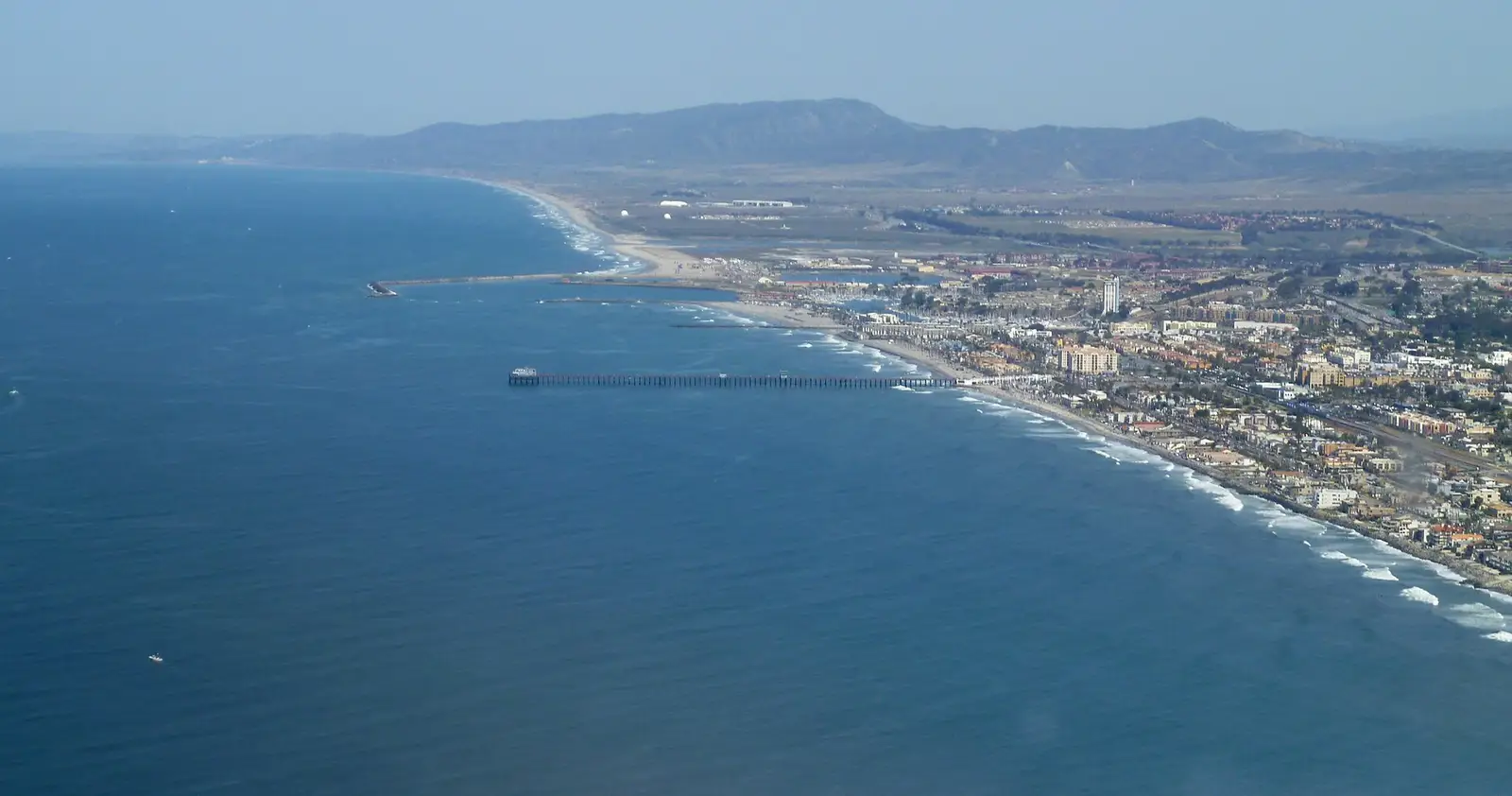
Oceanside anchors the coastal edge of North County San Diego, and its association-governed housing splits cleanly along the line between the old beach town and the newer inland tracts. Down by the water, the Oceanside Harbor and Marina district holds the city's densest condominium stock: Marina Towers, the 17-story building completed in 1976 that remains the tallest in the city, sits beside lower-rise harbor complexes, the beachfront homes of Marina Del Mar, and the downtown blocks now filling in around the pier. Climb inland and the picture changes. Ocean Hills Country Club, the 55-plus community of roughly 1,600 Mediterranean-style homes built in phases between 1984 and 1999, spreads across some 350 hillside acres, while master-planned Rancho Del Oro carries the stucco-and-tile subdivisions of the 1980s through the 2000s, and the golf-course community of Arrowood, built out through the 2000s and 2010s around a course that opened in 2005, adds a newer generation of planned homes. Between the two extremes sit established neighborhoods — Fire Mountain, San Luis Rey, Jeffries Ranch — each with its own blend of condominiums, townhomes, and planned developments.
That divide is exactly why a one-size-fits-all reserve study does Oceanside associations a disservice. A harbor-front condominium taking salt air and marine damp off the Pacific ages nothing like an inland home three or four miles up the San Luis Rey Valley, where heat and UV rather than corrosion set the pace of wear, and a funding plan built on generic useful-life tables will misjudge both. Apex Reserve Group, based in Irvine, prepares reserve studies scoped to what an Oceanside association actually is — the age of its buildings, the amenities it maintains, and whether its walls face the surf or the sun. We build the component inventory and the thirty-year plan around your property rather than a regional average.
Why Oceanside Associations Need Current Reserve Studies
Oceanside's association stock runs the full span from the mid-1970s harbor towers to subdivisions finished only this century, and each end of that range pushes on reserves differently. The older coastal condominiums — Marina Towers, the harbor and marina complexes, and the smaller beachfront buildings of downtown and South Oceanside — are decades into the replacement cycles for roofs, elevators, deck coatings, and metal railings, and salt air accelerates every one of those components. Useful-life estimates drawn from inland data routinely give coastal boards too much runway, which quietly leaves reserves short when the work comes due sooner than the schedule predicted. The inland side carries the opposite risk: master-planned communities such as Rancho Del Oro and Ocean Hills Country Club maintain sprawling shared amenities — pools, golf and clubhouse infrastructure, gates, private streets, and acres of irrigated landscape — whose combined replacement cost is easy to underestimate. A current reserve study grounded in an on-site inspection is what turns either situation into a funding plan a board can rely on, instead of a special assessment waiting to surface.
From Oceanside Harbor to the Central-East Tracts: A Look at the Local Landscape
The harbor and downtown form Oceanside's condominium core. Marina Towers and the surrounding harbor, Marina Del Mar, and beachfront associations sit within reach of the surf, so their reserve components lean toward waterproofing, elevators, exterior coatings, and corrosion-prone railings rather than the roofs and asphalt that dominate suburban budgets — and the ongoing downtown redevelopment near the pier is adding a fresh generation of mixed-use and condominium buildings to the mix. South Oceanside and the Fire Mountain hillside hold older, smaller beach-adjacent condos and townhomes, a good number of them self-managed. Moving inland, Ocean Hills Country Club is a category of its own: a gated 55-plus community whose eight villages each run their own association beneath a master association, maintaining a golf course, clubhouse, pools, and the signature white-stucco, red-tile homes across roughly 350 acres. The central-east corridor — Rancho Del Oro, Arrowood, Ocean Ranch, and the neighborhoods around them — is where the newer planned developments cluster, with amenity-rich associations dating from the 1980s through the 2010s. Farther out, Jeffries Ranch and the San Luis Rey Valley add semi-rural and equestrian character, and 55-plus enclaves like Peacock Hills widen the range. Each of these building types calls for a different component list, and we build the study to match yours.
What California Law Requires
California's Davis-Stirling Common Interest Development Act sets the baseline every Oceanside association works from. Civil Code Section 5550 requires a reserve study built on a physical, on-site inspection of the major components at least once every three years, with the funding plan reviewed and updated in each year between inspections. Civil Code Section 5300 then requires the reserve figures — current reserves, percent funded, and the planned contributions — to be summarized in the annual budget report that goes to every owner. On top of Davis-Stirling, Senate Bill 326 added a structural-safety requirement aimed squarely at condominium buildings with elevated, wood-framed elements: a licensed inspection of balconies, decks, walkways, and stairways more than six feet above ground, with the first inspection due by January 1, 2025 — a deadline that has already passed. That obligation reaches a large share of Oceanside's coastal condo stock, from the harbor towers to the older downtown and South Oceanside buildings, and its findings frequently feed back into the reserve study by changing the remaining life assigned to those elevated components.
Our Reserve Study Services in Oceanside
Full Reserve Study — A complete on-site inspection and a thirty-year funding plan, with component useful lives adjusted for salt-air exposure on the coast or for heat and UV inland, depending on where your property sits. Typical delivery: 3 to 4 weeks.
Reserve Study Update With Site Visit — A renewed site inspection every three to five years, most valuable for older harbor and beachfront buildings where conditions move faster than a paper projection assumes. Typical delivery: 2 to 3 weeks.
Off-Site Annual Update — A remote refresh in the years between inspections that keeps the funding plan and the Civil Code disclosures current for your annual budget report. Typical delivery: 1 to 2 weeks.
Oceanside Communities We Serve
We prepare reserve studies for associations across Oceanside, including the Oceanside Harbor and Marina district, Marina Towers, Marina Del Mar, downtown and the pier area, South Oceanside, Fire Mountain, Loma Alta, San Luis Rey, Jeffries Ranch, Ocean Hills Country Club, Rancho Del Oro, Ivey Ranch, Del Oro Hills, Arrowood, Ocean Ranch, Henie Hills, Peacock Hills, and planned communities throughout the city's coastal and inland neighborhoods.