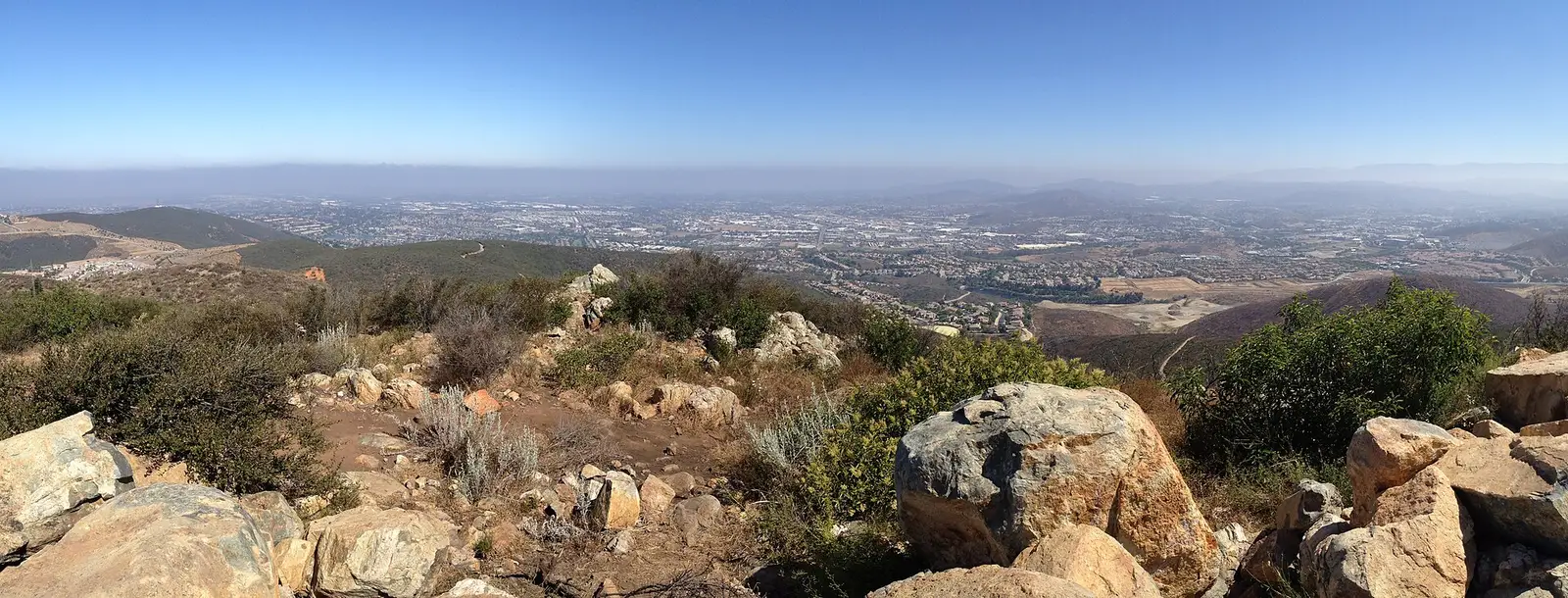
San Marcos sits in the hills of inland North County, roughly thirty-five miles north of downtown San Diego, and its association-governed housing splits cleanly into two eras. On the newer end are the hillside master-planned communities: San Elijo Hills, a 1,921-acre development in the city's southwest that was planned through the late 1990s and welcomed its first residents around 2000, climbing toward Double Peak with a walkable town center and thousands of homes; Old Creek Ranch to the south, built largely in the 2000s with a mix of single-family homes, townhomes, and condominiums; and Coronado Ranch, a community of about 475 homes dating to roughly 2004. On the older end sits Lake San Marcos, developed from the early 1960s around an 80-acre lake, where more than twenty separate homeowners associations and a stock of 1960s and 1970s single-family homes, patio homes, and condominiums surround the water and the golf course — several of them built specifically for residents 55 and older.
Those two eras almost never share a component list. A 1970s condominium at Lake San Marcos, with wood-framed balconies and walkways, aging low-slope roofs, and frontage on the lake, ages nothing like a 2000s hillside association in San Elijo Hills, where the reserve budget is dominated by graded slopes, retaining walls, miles of private trails and paseos, and community pools. A generic reserve study, keyed to inland-average useful lives, tends to miss both: it underestimates how hard San Marcos's hot, dry summers and intense sun are on roofing, exterior paint, asphalt, and pool decks, and it rarely accounts for the slope drainage and fire-fuel setbacks that hillside communities here have to maintain. Apex Reserve Group, based in Irvine, builds each San Marcos reserve study around what your association actually owns — its real construction era, its site, and the inland climate that is aging it.
Why San Marcos Associations Need Current Reserve Studies
Reserve planning in San Marcos is shaped by two things at once: a widening spread of building ages and an inland climate that is harder on exterior components than the coast. The lakeside associations around Lake San Marcos are now more than fifty years old, deep into the replacement cycles for roofs, plumbing, railings, and elevated walkways that a 1970s community was never funded to face all at once — and Discovery Hills, a neighborhood of homes built from the late 1970s through the 1990s around Discovery Lake, is entering many of the same cycles. The master-planned communities that filled the hills after 2000 — San Elijo Hills, Old Creek Ranch, Coronado Ranch — are younger, but they carry long lists of common components that come due on their own schedule: private streets, extensive slope landscaping and irrigation, retaining walls, trail networks, and recreation centers. Inland heat and ultraviolet exposure push all of it along faster than a standard useful-life table assumes; San Marcos summers routinely climb into the 90s and have reached 112 degrees, and that sun bakes asphalt, coatings, and pool equipment year after year. A current reserve study built on an on-site inspection replaces guesswork with realistic replacement dates and a funding plan matched to your buildings and your site, which is what keeps a board from resorting to a special assessment.
From Hillside San Elijo Hills to Lakeside Condos: San Marcos's Association Landscape
San Elijo Hills anchors the city's southwest, a hillside master-planned community rising toward Double Peak — at 1,646 feet, the highest point in San Marcos — with single-family neighborhoods, townhomes, and condominiums organized around a town center, parks, and trails; its associations maintain graded slopes, retaining walls, and shared recreation that dominate the reserve budget. To the south, Old Creek Ranch spreads across a semi-rural stretch near the city's edge, combining single-family homes with condominium and townhome associations built mostly in the 2000s. Lake San Marcos, around the lake and its golf course, is the older world: more than twenty associations of 1960s and 1970s single-family homes, patio homes, and condominiums, several of them 55-and-older communities such as Chateau Lake San Marcos, where lake frontage, docks, and wood-framed decks and walkways raise component questions most inland studies never see. Through the city's center and south, communities like Coronado Ranch, Rancho Tesoro, and Discovery Hills — the last a neighborhood of homes built from the late 1970s through the 1990s around Discovery Lake — fill in the map, while to the north the semi-rural properties of Twin Oaks Valley round out a city that also anchors California State University San Marcos. Each of these calls for a different component inventory, and we build the study around yours.
What California Law Requires
California's Davis-Stirling Act sets the baseline. Civil Code Section 5550 requires most common interest developments to complete a reserve study based on an on-site inspection at least once every three years, and to review and update it every year in between. Civil Code Section 5300 requires the results — your reserve balances, funding plan, and percent-funded status — to be summarized in the annual budget report distributed to every owner. A third law reaches much of San Marcos's condominium stock: Senate Bill 326, which requires associations with condominium buildings to have a licensed structural or civil engineer, or architect inspect elevated balconies, decks, stairways, and walkways that rely on wood or wood-based framing. The first inspection was due by January 1, 2025 — a deadline that has already passed — so any Lake San Marcos condominium association or newer townhome-style project that has not completed one is now behind. Because those inspections often reveal that a deck or walkway will need attention sooner than assumed, we fold SB 326 findings directly into the reserve study.
Our Reserve Study Services in San Marcos
Full Reserve Study — A complete on-site inspection and a 30-year funding plan, with component useful lives set to your association's real construction era and adjusted for San Marcos's inland heat, sun, and hillside conditions. Typical delivery: 3 to 4 weeks.
Reserve Study Update With Site Visit — A fresh on-site review every three to five years, especially useful for the older Lake San Marcos associations, where roofs, decks, and railings change condition faster than a paper projection assumes. Typical delivery: 2 to 3 weeks.
Off-Site Annual Update — A remote update in the years between site visits that keeps your funding plan and Civil Code disclosures current. Typical delivery: 1 to 2 weeks.
San Marcos Communities We Serve
We prepare reserve studies for associations across San Marcos, including San Elijo Hills, Lake San Marcos, Old Creek Ranch, Coronado Ranch, Rancho Coronado, Discovery Hills, Discovery Meadows, Rancho Tesoro, Rancho Santalina, Santa Fe Hills, Coronado Hills, Stone Canyon, Sage Canyon, Twin Oaks Valley, the Creek District, and the neighborhoods surrounding California State University San Marcos.