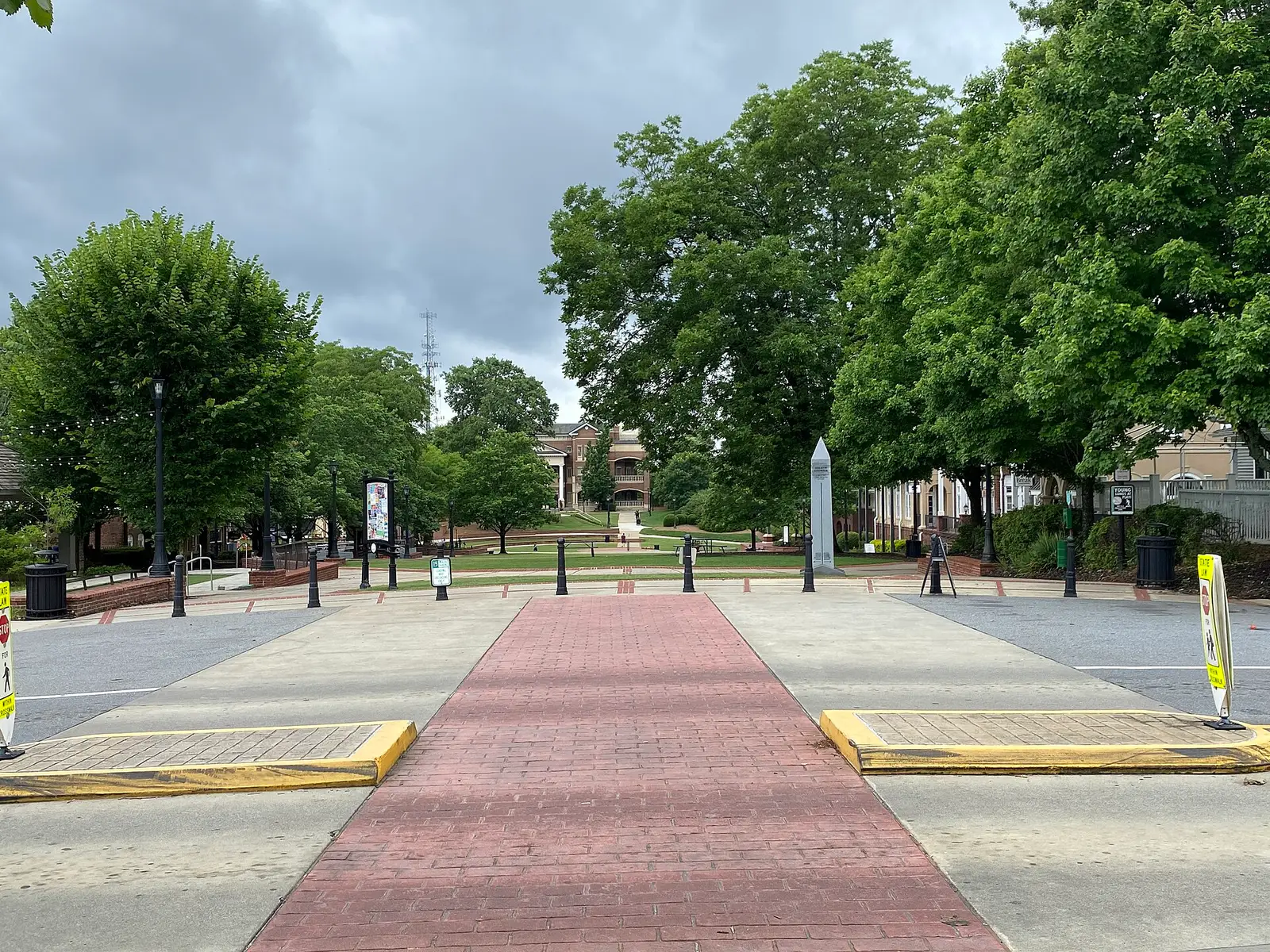
Duluth sits in west-central Gwinnett County, incorporated in 1876 as a railroad town and now home to roughly 32,000 residents along the Chattahoochee River. Its community associations span a wide range of ages and forms. Sugarloaf Country Club, the gated golf community that opened in 1997 around the 27-hole TPC Sugarloaf course, anchors the estate end of the market, while Sweet Bottom Plantation — a gated riverfront enclave of antebellum-style homes begun in the mid-1980s — represents an earlier generation of development. Between them sit dozens of swim-and-tennis subdivisions and townhome communities built from the 1980s through the 2000s, many strung along the river corridor with names like Howell Park, Woodehaven at Chattahoochee Crossing, and Chattahoochee Reserve. Nearer the restored Town Green downtown, finished in 2002, and the Parsons Alley redevelopment that followed in 2016, newer attached housing rounds out the picture.
That breadth is why an off-the-shelf reserve study rarely serves a Duluth board well. A late-1990s gated community with a clubhouse, controlled entries, and miles of private streets carries a completely different component list than a 1980s townhome cluster with one pool and a stormwater pond, yet a generic template treats their roofs, decks, and coatings by the same national averages. Apex Reserve Group works from Irvine, California, and prepares reserve studies built around what your association actually owns and how the local climate is aging it. A team member based in metro Atlanta performs the on-site inspection in person, walking your buildings, amenities, and drainage infrastructure rather than estimating them from across the country.
Why Duluth Associations Need Current Reserve Studies
Two forces make reserve planning urgent here: the age of the housing and the climate it sits in. A large share of Duluth's swim-and-tennis subdivisions went up between the 1980s and the early 2000s, which puts them squarely in the window where original roofs, asphalt drives, pool shells, wood siding, fencing, and clubhouse systems all reach the end of their service lives at roughly the same time. Boards that have coasted on decades-old assumptions often find several major projects converging in the same handful of years. Layered on top is a humid subtropical environment that is unkind to building materials: summer heat and moisture break down exterior paint and sealants, encourage mildew on siding and decking, and shorten the life of shingle roofs and HVAC equipment, while Gwinnett's red clay soils shift under foundations, pavement, and retaining walls. A current study with an on-site inspection replaces guesswork with observed condition, so your board can fund replacements on a schedule instead of scrambling for a special assessment when a roof or a pond wall finally gives.
From Sugarloaf's Gated Estates to the Chattahoochee River Corridor
Duluth's associations sort into a few recognizable types. On the upscale end, Sugarloaf Country Club spreads across roughly 1,200 acres of gated, golf-oriented estate homes built largely between 1996 and 2009; its reserves lean toward private roadways, entry gates, extensive common landscaping, and shared recreation rather than the simple envelopes of a small townhome group. Along the Chattahoochee, gated Sweet Bottom Plantation and a string of river-adjacent communities — Woodehaven at Chattahoochee Crossing, Chattahoochee Reserve, and Chattahoochee Cove among them — pair pools and tennis courts with riverfront parks, trails, and the stormwater and bank-stability questions that come with sitting near the water. Townhome developments such as Howell Park add clubhouses, fitness rooms, and shared parking to the inventory. Downtown, the walkable district around the Town Green and Parsons Alley has drawn newer attached housing into the mix, and to the north the Gas South District arena-and-convention campus — the former Infinite Energy Center, on Sugarloaf Parkway just outside the city limits — marks Duluth as a regional destination. Each of these community types needs its own component inventory, not a shared one.
What Georgia Law and Your Lenders Expect
Georgia has no statute that orders a homeowners or condominium association to commission a reserve study; when the requirement exists, it comes from somewhere else. The first place to look is your own governing documents. Many Duluth declarations and bylaws obligate the board to fund reserves or to study them on a schedule, and a board that ignores its own recorded covenants exposes its members personally. State law sets the backdrop. The Georgia Condominium Act (O.C.G.A. Title 44, Chapter 3) requires condominium budgets to itemize reserves for deferred maintenance and depreciation and to keep that money in separate reserve accounts, and the opt-in Georgia Property Owners' Association Act, in the same chapter, governs the HOAs that have recorded themselves under it. Neither statute forces a formal reserve study, but both hold directors to a fiduciary duty of ordinary care — and a board that leaves foreseeable capital costs, like a failing roof or clubhouse, out of its planning has a hard time showing it met that duty. Lenders then apply their own test. FHA, Fannie Mae, and Freddie Mac review of condominium projects generally looks for reserve contributions of at least 10 percent of the annual budget, or a current reserve study in place of that floor, and post-Surfside underwriting has sharpened scrutiny of deferred maintenance. For loan applications dated on or after January 4, 2027, Fannie Mae and Freddie Mac raise that floor to 15 percent of the budget unless a recent reserve study funded at its highest recommended level is on file. For Duluth's many 1990s-through-2000s condos and townhomes, that change makes a defensible study a practical necessity for keeping units financeable.
Our Reserve Study Services in Duluth
Full Reserve Study — A ground-up study built on a complete on-site inspection, a full component inventory, and a 30-year funding plan with percent-funded analysis, the right starting point for a community that has never had one or needs a fresh baseline. Typical delivery: 3 to 4 weeks.
Reserve Study Update With Site Visit — A return visit every three to five years to re-inspect components, log completed and deferred projects, and re-calibrate the funding plan to conditions on the ground. Typical delivery: 2 to 3 weeks.
Off-Site Annual Update — A remote refresh in the intervening years that adjusts costs, contributions, and completed work without a new site walk, keeping the plan current between inspections. Typical delivery: 1 to 2 weeks.
Duluth Communities We Serve
Our service area covers homeowner and condominium associations across Duluth and the surrounding western Gwinnett corridor, including Sugarloaf Country Club, Sweet Bottom Plantation, Howell Park, Woodehaven at Chattahoochee Crossing, Chattahoochee Reserve, Chattahoochee Cove, and Chattahoochee Hills, along with the swim-and-tennis and townhome communities near Pleasant Hill Road, Sugarloaf Parkway, and the downtown Town Green district. Our service area also reaches nearby associations in Berkeley Lake, Suwanee, Johns Creek, Peachtree Corners, and Norcross. If your community sits in or around Duluth, we can inspect it and build your study, whether or not it appears on this list.