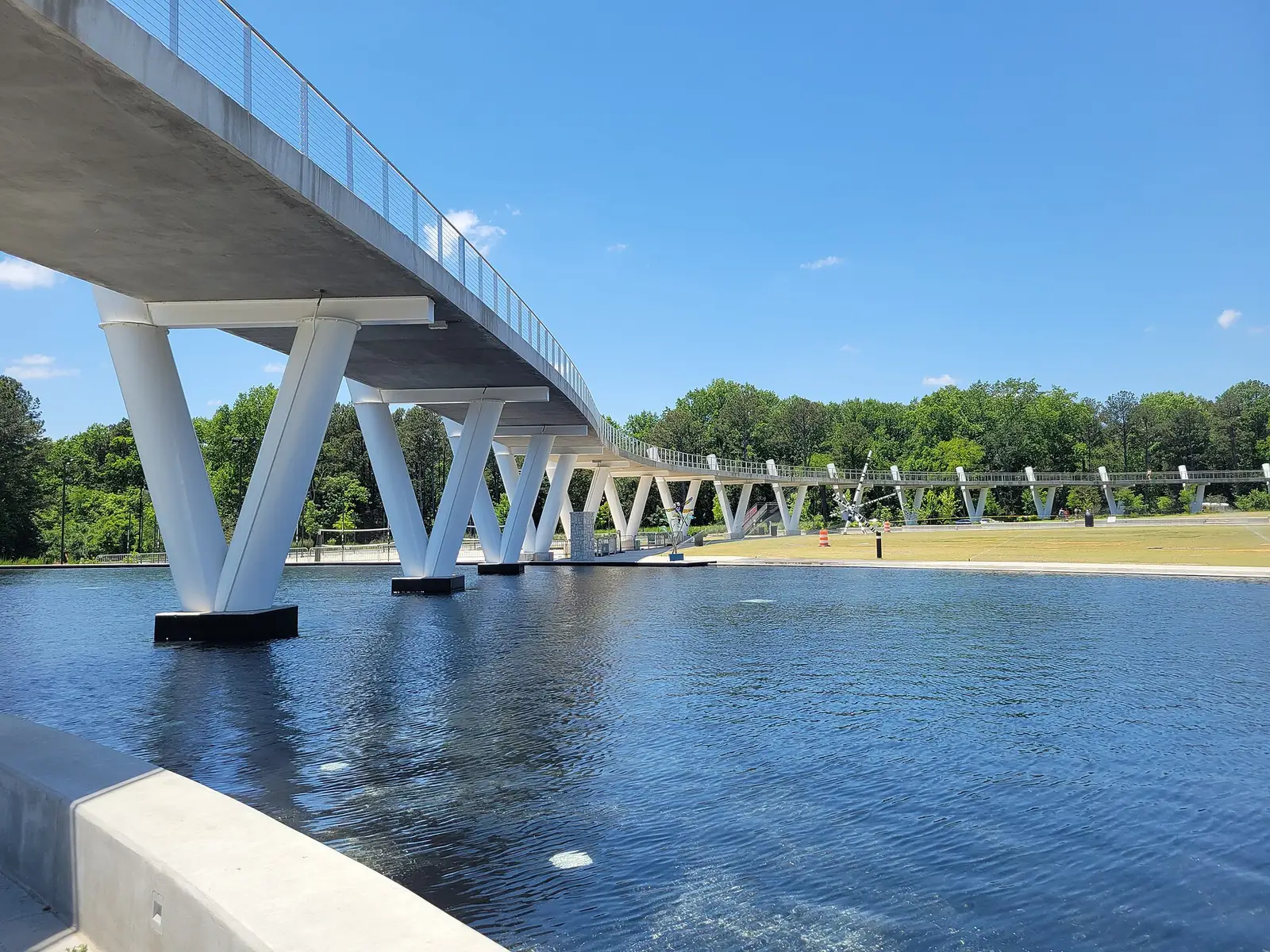
Suwanee sits in the northwest corner of Gwinnett County, where a deliberately built downtown meets a range of master-planned residential communities. The city incorporated in 1949 as a small railroad village — its depot dates to 1871 — and grew to roughly 20,000 residents by the 2020 census, with a housing stock that skews young and master-planned. Guard-gated golf communities anchor the high end: The River Club, a private enclave along the Chattahoochee that opened around 2005, and Edinburgh, whose homes wrap the Jack Nicklaus-designed Bear's Best course. Around them sit walkable Town Center townhomes and condominiums, resort-amenity subdivisions such as Morningview, and a steady wave of newer low-maintenance townhome enclaves like Echo Park and The Enclave at Suwanee Station. Many of these carry Suwanee mailing addresses that actually fall in unincorporated Gwinnett or Forsyth County, and every one of these association types owns a very different mix of components.
That range is exactly why an off-the-shelf reserve study tends to miss the mark here. A late-1990s golf community with clubhouses, tennis courts, and miles of gated streets does not age like a 2018 townhome cluster that owns its roofs and a single pool, and neither behaves the way a national useful-life table predicts once Georgia's heat, humidity, and clay soils enter the equation. Apex Reserve Group is based in Irvine, California, and prepares each reserve study around what your association actually owns — a component inventory and funding plan specific to your property. A team member based in the metro Atlanta area performs the on-site inspections, so the study reflects field conditions in Suwanee rather than assumptions made from a spreadsheet two time zones away.
Why Suwanee Associations Need Current Reserve Studies
Reserve pressure in Suwanee comes from two directions at once: the age curve of its housing and a climate that works against it. A large share of the city's associations went up in the late 1990s and 2000s, which means original roofs, exterior paint, wood trim, asphalt drives, pool equipment, and amenity buildings are now reaching or passing the end of their first useful-life cycle together. Communities that installed everything within a few years of each other tend to face those replacements within a few years of each other too — a bunching problem that ambushes boards when it has not been mapped in advance. Georgia's humid subtropical climate then compresses the timeline: sustained heat and humidity break down coatings, siding, and decking; mildew and organic growth attack roofs and painted surfaces; clay soils shift under slabs and pavement; and the occasional hailstorm or winter ice event adds wear that inland-average tables understate. A current reserve study built on an actual site visit turns those pressures into dated, costed projections, so contributions climb gradually instead of landing as a special assessment.
From Town Center Townhomes to Gated Golf Communities: Suwanee's Association Landscape
Suwanee's associations sort into a few groups whose reserve profiles barely overlap. The downtown core built around Town Center Park — the ten-acre park opened in December 2003, with the landmark City Hall following in 2009 — holds roughly 147 townhome and condominium units in a walkable, mixed-use setting where shared roofs, breezeways, and surface parking drive the budget. Gated golf communities form a second group: The River Club, a guard-gated community along the Chattahoochee that opened around 2005, and Edinburgh at Bear's Best, some 463 homes surrounding a Jack Nicklaus signature course, both on the Gwinnett County side, alongside Forsyth-County-side communities that carry Suwanee addresses in unincorporated territory, such as Olde Atlanta Club, whose homes date to the 1990s, and the large gated Laurel Springs. These properties own clubhouses, pools, tennis and pickleball courts, gatehouses, and extensive private roadways that dwarf an ordinary subdivision's component list. A third group is the resort-amenity and family subdivision — Morningview, built from the late 1990s into the early 2000s, and Shadowbrook at Town Center from the mid-2000s. A fourth is the newer low-maintenance townhome community, including Echo Park and The Enclave at Suwanee Station, where the association often owns the roofs and the full exterior envelope. We build each study around the group your community actually belongs to.
What Georgia Law and Your Lenders Expect
Georgia has no statute that orders homeowner or condominium associations to commission reserve studies — there is no state mandate on the books. What governs your board instead is a three-part framework. First, your own recorded documents: many Suwanee declarations, bylaws, and covenants require the association to maintain reserves or to fund for major repairs, and a board that disregards its own governing documents exposes its directors to liability. Second, Georgia's association statutes. Condominiums here operate under the Georgia Condominium Act, found in Title 44, Chapter 3 of the Official Code of Georgia, while planned-community HOAs may operate under the opt-in Georgia Property Owners' Association Act in that same chapter when their declaration expressly adopts it. Neither statute forces a reserve study, but both leave directors bound by fiduciary duties of care and good faith — and knowingly failing to plan for a foreseeable roof, paving, or clubhouse replacement is hard to reconcile with those duties. Third, and increasingly decisive, is lender scrutiny. FHA, Fannie Mae, and Freddie Mac all review a condominium project's finances before approving loans, and their guidelines generally look for at least ten percent of the annual budget directed to reserves or a professional reserve study that supports the funding level, with sharply closer attention to deferred maintenance since the 2021 Surfside collapse. That bar is rising: for loan applications dated on or after January 4, 2027, Fannie Mae and Freddie Mac raise the reserve-allocation minimum to fifteen percent of the budget unless a current reserve study following the highest recommended funding justifies a lower figure. For Suwanee's many 2000s-era communities now entering their first heavy replacement years, a defensible reserve study is fast becoming the line between a financeable community and one where buyers struggle to close.
Our Reserve Study Services in Suwanee
Full Reserve Study — A ground-up component inventory built from an on-site inspection, with condition photos, remaining-life estimates set against Suwanee's climate, a 30-year funding projection, and percent-funded analysis; the right starting point for a community that has never commissioned one or needs a clean baseline. Typical delivery: 3 to 4 weeks.
Reserve Study Update With Site Visit — A return visit, best scheduled every three to five years, to re-inspect components, capture completed projects and fresh wear, and reset the funding plan against current costs. Typical delivery: 2 to 3 weeks.
Off-Site Annual Update — A between-visit refresh that adjusts your plan for inflation, finished work, and changes to the reserve balance without a new inspection, keeping contributions and disclosures current. Typical delivery: 1 to 2 weeks.
Suwanee Communities We Serve
Our service area covers Suwanee and the surrounding 30024 communities across Gwinnett and Forsyth counties, and we welcome associations of every size and type. That includes the walkable townhomes and condominiums around Suwanee Town Center; gated golf communities such as The River Club, Edinburgh at Bear's Best, Olde Atlanta Club, and Laurel Springs; established amenity subdivisions like Morningview and Shadowbrook at Town Center; newer low-maintenance townhome enclaves including Echo Park, The Enclave at Suwanee Station, and Northaven; and the many self-managed and professionally managed associations near George Pierce Park, along Peachtree Industrial Boulevard, and throughout the northwest Gwinnett corridor toward Sugar Hill and Duluth. If your community carries a Suwanee address, we can prepare its reserve study whether it sits inside the city limits or in unincorporated Gwinnett or Forsyth County.