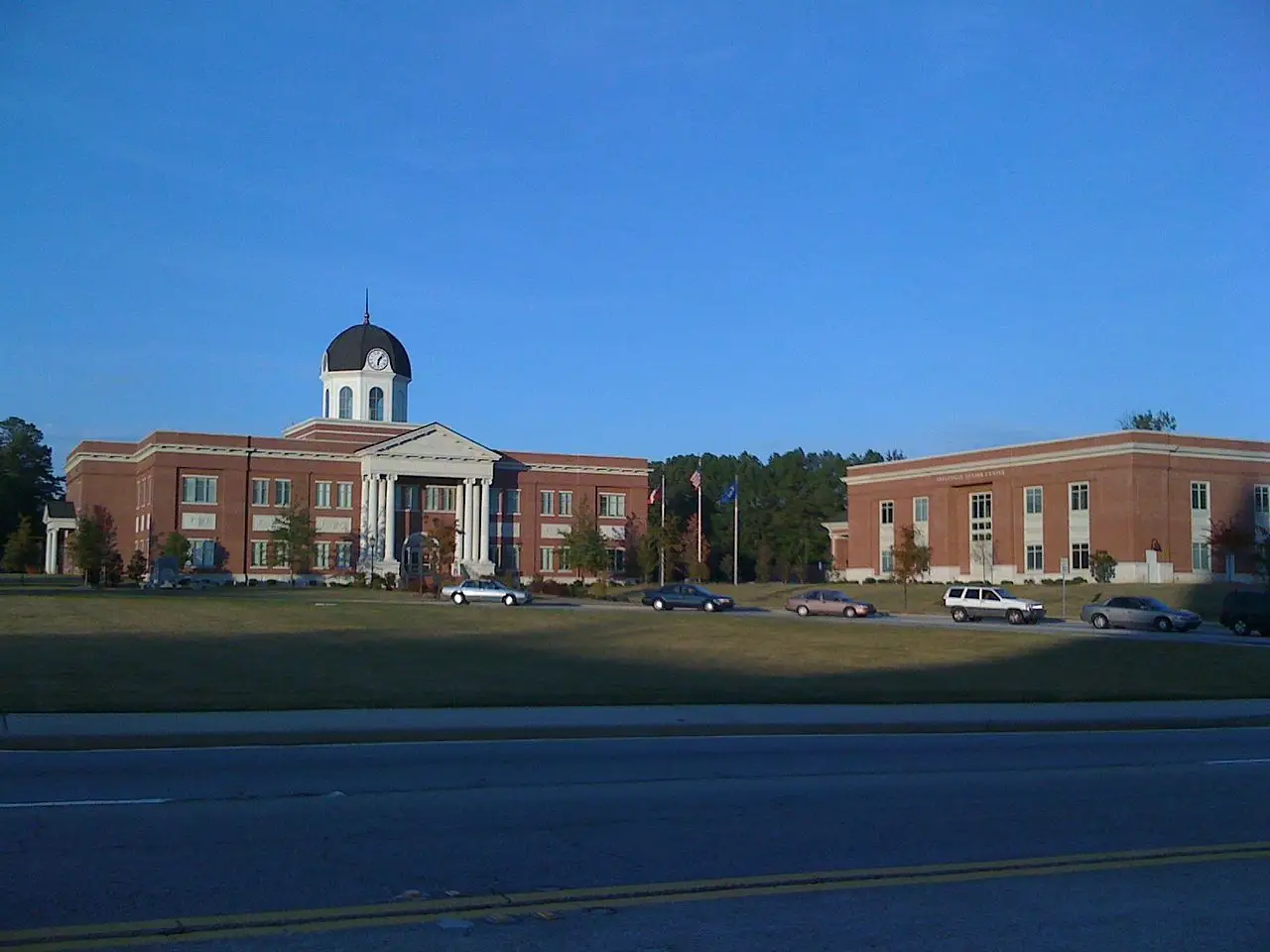
Snellville sits in southeast Gwinnett County along the US 78 corridor, and its community associations trace roughly half a century of east-metro homebuilding. The golf-course homes wrapped around Summit Chase Country Club, laid out in the mid-1970s, sit not far from lake-oriented neighborhoods such as Norris Lake, which took shape in the late 1980s. A run of amenity-driven subdivisions followed around the turn of the century — Bright Water, with its clubhouse, tennis courts, competition pool, and 53-acre private Lake Matthews, went up between 1998 and 2002 — and the 2000s and 2010s added communities like Trillium Forest and Westchester Place. Downtown, The Grove at Towne Center has introduced a category the city did not have a decade ago: a mixed-use redevelopment whose apartments and shared amenities broke ground in 2021.
Those communities do not age on the same clock, which is why a template study rarely serves any of them well. A 1970s clubhouse and pool deck, a 1990s neighborhood built around a private lake, and a brand-new mixed-use building carry entirely different component inventories and replacement horizons. Apex Reserve Group works from Irvine, California, and a team member who lives in the metro Atlanta area performs the on-site inspections here — walking your roofs, siding, ponds, and amenities in person so the funding plan reflects what your association actually owns and how east-Gwinnett conditions are wearing it down.
Why Snellville Associations Need Current Reserve Studies
Two forces quietly raise capital costs for Snellville boards: the age of the housing stock and the humid-subtropical climate that surrounds it. Much of the city's 30078 and 30039 housing was built between the 1970s and the early 2000s, so large shares of association-owned roofing, siding, fencing, and pool equipment are now reaching — or have already passed — the point where replacement, not patching, is the honest budget line. Georgia's heat and moisture do not wait politely for that schedule. Long, humid summers press mildew into painted surfaces, wood siding, and shaded decking; a heavy tree canopy drops limbs and leaf litter that cut roof and gutter life and hold dampness against surfaces; and the region's red clay soils swell and shrink through wet and dry spells in ways that stress foundations, retaining walls, and the earthen berms around stormwater detention ponds. Off-the-shelf useful-life tables, tuned to gentler or drier regions, tend to assume these parts survive longer than they do here. A current reserve study built on an in-person inspection replaces those averages with realistic dates and dollar figures, so a board can work from a steady contribution schedule rather than scramble to pass an emergency special assessment.
From Summit Chase to Scenic Highway: The Shape of Snellville's Associations
Snellville's associations spread across a compact but varied footprint. Around Summit Chase Country Club, off US 78 a couple of miles east of downtown, the housing is golf-course-oriented and now roughly half a century old, with community tennis, swimming, and social facilities well into their second or third replacement cycle. To the south, toward Lenora Park and the Yellow River near Stone Mountain, subdivisions lean toward larger lots and detached homes, many governed by modest HOAs responsible for entrance features, common landscaping, and detention ponds rather than deep amenity lists. Along the Scenic Highway (GA 124) and the Webb Gin corridor, established single-family neighborhoods sit beside newer retail and development, while the north side near T.W. Briscoe Park and the farmers market mixes older stock with more recent construction. Downtown, The Grove at Towne Center — an eighteen-acre public-private redevelopment that broke ground in 2021 and opened its first phase mid-decade — has brought multi-family and mixed-use buildings whose elevators, structured parking, and shared mechanical systems represent a component profile local associations have rarely had to fund. Each setting calls for its own inventory, and we build the study around the one in front of us.
What Georgia Law and Your Lenders Expect
Georgia has no statute that orders a community association to commission a reserve study. What governs a Snellville board instead is a layered set of obligations. The first layer is your own recorded paperwork: many declarations, bylaws, and covenants set expectations for reserve funding or periodic review, and a board that disregards its own governing documents invites a challenge it could have avoided. The second layer is state association law. Condominiums fall under the Georgia Condominium Act (O.C.G.A. Title 44, Chapter 3), which requires that money collected for reserves be held in dedicated accounts and not spent on ordinary operating costs without a supermajority of owners; a homeowner association may separately opt in to the Georgia Property Owners' Association Act (O.C.G.A. Section 44-3-220 and following) by recording an election to be bound by it. Neither statute compels a board to obtain a reserve study — yet both sit against the fiduciary duty every director owes the association, and a board that leaves foreseeable capital costs unfunded stands on shaky ground when a failure it should have seen coming finally arrives.
The third layer is the mortgage market, and it has grown far more exacting. Freddie Mac, Fannie Mae, and FHA each weigh an association's reserve posture before backing loans on the units inside it, and their project reviews generally look for roughly ten percent of the annual budget directed to reserves, or a current, compliant reserve study in its place. Attention to deferred maintenance sharpened sharply after the 2021 Surfside collapse. And the bar is rising on a fixed date: for loan applications dated on or after January 4, 2027, Fannie Mae and Freddie Mac lift that reserve-allocation floor from about ten percent to fifteen percent of the budget, with a reserve study updated within the past three years and funded at its highest recommended level offered as the alternative to the flat percentage. For Snellville's many established, amenity-carrying communities, that change makes a well-supported study less a formality than a condition of keeping units financeable.
Our Reserve Study Services in Snellville
Full Reserve Study — A complete on-site inspection of your common-area components and a 30-year funding plan, built for a community that has never had a study or needs a fresh baseline. Typical delivery: 3 to 4 weeks.
Reserve Study Update With Site Visit — A return inspection, best scheduled every three to five years, that documents current conditions and resets the funding plan as your Snellville property ages. Typical delivery: 2 to 3 weeks.
Off-Site Annual Update — A remote refresh for the years between site visits that folds in inflation, completed projects, and changes to your reserve balance. Typical delivery: 1 to 2 weeks.
Snellville Communities We Serve
Our service area covers associations across Snellville and the surrounding east-Gwinnett communities, in both the 30078 and 30039 ZIP codes. That reach includes the golf-course neighborhoods around Summit Chase; lake and amenity communities such as Norris Lake and Bright Water; established single-family subdivisions like Brookwood Manor; newer developments including Trillium Forest, Westchester Place, and the mixed-use residences at The Grove at Towne Center; and active-adult communities such as Soleil Summit Chase. We also work with associations near Presidential Commons, the Shoppes at Webb Gin, the Scenic Highway corridor, T.W. Briscoe Park, and Lenora Park, along with the unincorporated pockets of southeast Gwinnett that carry a Snellville mailing address.